Your Path to Breakthroughs: Insights from Jan McDonald

From hopeless drunk to 30 years sober and helping hundreds of individuals and organizations unlock their ‘and then some’, I distill all the lessons gained from those transformational life experiences and share them with you in this space.

I invite you to explore these insights as way to help you breakthrough the challenges that are stopping you from becoming who you want to be.

Categories

Download the FREE Guide

5 Simple Steps to Maximize Your Effectiveness

"The value of an idea lies in the using of it."

--Thomas Edison

We can’t take an action without thinking about it or having the idea first. That’s a great thing when we are tempted to do something that will negatively impact others  or ourselves. When I sobered up…the first time…all I could think  was “Just don’t drink.” That idea was constantly on my mind. I constantly thought about what I couldn’t have. Those thoughts about drinking, even though I knew I shouldn’t, took root. and  I was back out there drinking again…like Eve in the Garden of Eden. Of all the luscious fruit she could choose, she obsessed over the one fruit that she wasn’t supposed to have…and she ate it. I think it was Les Brown who said, “Where your focus goes, there your energy flows.” 

My suggestion to those struggling with alcohol or drugs is to not even entertain the thought.  Put it out of your mind. Get an idea and picture of the person that you want to become. Put that image in your mind and think about that instead. That idea, that image that you hold in your mind is the one you move toward and thoughts of alcohol evaporate.  The less we use neuropathways, those habits we have formed in our mind, the weaker they become, until they become like the old Highway 1 on the Oregon Coast. You can still see portions of it, but it is covered with weeds, vegetation and cracks. It is unusable. 

What about those clever ideas that come to our minds?  My mom had this great idea for cloth diapers that had ties on them, thereby removing the need for pins. WOW! I look back to former days, all the pin pricks and stress about pricking my babies while changing a diaper. What a helpful invention that would have been.  Mom never did anything with that fabulous idea.  Some time later,  a Westport housewife named Marion Donovan invented the “Boater,”  a waterproof covering for cloth diapers.  Marion was granted 4 patents, one included the use of plastic snaps that replaced those nasty old safety pins.  What if Mom had taken action on her idea?   

What great ideas have you had that you just dismissed with, “Oh, that’ll never happen,”  or “that’s impossible?”  Then you put that insightful idea out of your mind, rather than entertain the possibility.   Maybe your idea might not work, or it might fail?  In 1968, Dr. Spencer Silver, a chemist at 3M Company was trying to invent a super-strong adhesive that would stick multiple things together. His “epic fail” turned out to be Post-It notes!   

What is the value of one idea? 

My challenge to you this week is to take captive your brilliant thoughts and ideas that come to mind and write them down. Get a little black book, keep it with you, and when you get those crazy ideas, write them down and entertain them.  Who knows,  maybe, just maybe, one of those ideas could be life-changing. 

On the other hand, what thoughts or ideas have turned into negative super-highways? You would rather them look like old Highway 1.  I have a great question for you to ask  yourself when those defeating thoughts pop up.  “Who would I like to be in this moment?” Think on that idea and image and you will move toward that, instead. 

Make it a great week!

 Jan 

“To be intentional means working with purpose to make every action count.”

--John C Maxwel

Successful leaders are intentional. They know what they are doing and why they are doing it. Here are some steps to become more intentional that come from “The 17 Essential Qualities of a Team Player,” by John Maxwell:

1. Have a purpose worth living for:  Purpose is something you do. You live your purpose through every single action you take and decision you make in life. What is that for you? When they put the tombstone on your head, what will you be grateful for? What will you be proud of? What will you regret? Those questions may help you find your purpose. 

2.  Know your strengths and your weaknesses:  Put yourself in the position that allows you to use your natural gifts and abilities. Playing to your strengths rekindles your passions and renews your energy. 

3.  Prioritize your responsibilities:  Once you know the “why” of your life, it becomes much easier to figure out the “what” and the “when.”

4. Learn to say no: If you try to do every good thing that comes your way, you’ll miss the best for you. You can’t accomplish much without focus. This was huge for me when I left my job to pursue my own business. I had many requests to serve on boards of directors and other great opportunities. Those things were all good, but the best for me was to live according to my purpose, which is coaching, consulting and speaking.  I still weigh every opportunity that comes my way against my purpose. 

5. Commit yourself to long-term achievement: Realize that most victories in life come to us as we persevere to achieve them. Most successes don’t happen overnight, but are realized by small incremental wins sustained over time. Yes, we need to be intentional in celebrating each of those small wins along the way. 

“Intentional living is the art of making our own choices before others’ choices make us.”  Richie Norton

Intentionally typed,

Jan

“On the other side of complicated is the wonderful, wide-open world of effective collaboration and a workplace you love.”

--Ryan Leak

Have you ever noticed how quickly your brain reacts when you run into a complicated person? Before they even say a word, your brain goes into protection mode, scanning for three things:

1️⃣ Discomfort – Your brain senses tension and starts preparing for conflict. It tells you, “This might not be safe—get ready to defend yourself.”
2️⃣ Uncertainty – You can’t predict what they’ll do or say next, and your brain doesn’t like surprises. It fills in the blanks with stories to feel more prepared—even if those stories aren’t true.
3️⃣ Lack of Control – When you realize you can’t control their reaction, your brain tries harder to manage the situation, which often creates even more frustration.

Those three responses—discomfort, uncertainty, and lack of control—are perfectly normal. They’re your brain’s way of trying to protect you. The problem is, they can also hijack your ability to listen, empathize, and connect.

The good news? Once you recognize what’s happening in your mind, you can choose a different response. You can replace reactivity with curiosity—and tension with connection. 

That’s what we’ll unpack in our upcoming workshop, How to Work with Complicated People—a 3-hour, practical, and laughter-filled session inspired by Ryan Leak’s book and the DISC personality framework. You’ll also come to understand how you are complicated!

You’ll learn how to:
✅ Recognize what triggers you when working with complicated people
✅ Communicate with clarity and empathy across personality types
✅ De-escalate conflict and strengthen relationships


Complicatedly typed, 

Jan

Jan McDonald
Maxwell Leadership Certified Team

Follow me on facebook for more enlightening information:) @janmariemcdonald

"When you let go, you create space for something better.”

--Anonymous

I love fall. It’s one of the most beautiful and mysterious seasons. We can look at the exact same kind of trees all in a row and some of the leaves have turned and some haven’t. How does that happen? The reds and the golds of the leaves that are changing and falling are just spectacular! The trees are letting go of this year’s leaves so they can sleep and refuel for next year’s growth.


Fall is a time of change, a time for nature to let go of the old and begin to prepare for the new.  It’s the time of year where I begin to look at my wardrobe and start to cull the items that I don’t wear or don’t like any more.  

I can’t get rid of that sweater! It belonged to Mom.  (Yes, and she passed away in 2012. I’ve been struggling to let go of this sweater for years.) And the faux fur, black, hooded jacket that I bought when I visited my sister in Cleveland. That jacket is soooo warm, but the wrists on the sleeves are a bit worn. Oh, yeah, the shoes that hurt my toes, and I can only wear them for about an hour…but they were expensive.  I have five purses in my closet which I will probably never use again…but you never know…I had the most awesome blue swede platform clogs that I finally took to Goodwill and now they’re back in style. When you get to be my age, everything comes back in style at one time or another. 

This just makes me laugh. I first wrote this email in 2022. This last spring (2025 Ha!), I got rid of the purses, shoes and Mom’s sweater—but I still have that faux fur jacket, even though I haven’t worn it. Crazy. Some things are just comfortable, even if we never use them.

Like old, limiting mindsets, we hang onto what once felt familiar or safe—even when it no longer serves us. Some of those mindsets are easy to spot, and others are hidden beneath layers of habit and comfort. But like the leaves on my maple, maybe it’s time to let a few fall—to make room for new growth.

My question to you is, what are you hanging on to that needs to be shed so you can prepare to bring in the new?  What leaves are hanging on your tree that are bursting with the red and gold of letting go, so you can embrace the new?  What old thinking patterns need to change so that new you can spring forth into the next year?

Need help letting go of some old to make room for the new?  I’m just an email away.

Anticipating the new,


Jan

"Tomorrow is never promised, so love and appreciate the people who are in your life."

--Me

Dennis and I just came back from a wonderful, refreshing vacation at the Oregon Coast. It was the first vacation that we took in over a year.  We didn’t have cell service much of the time and that turned out to be a blessing.

When we did get our service back, we heard about the assassination of Charlie Kirk. Dennis and I didn’t have words. How does that happen in the United States of America? It’s heartbreaking. 

Sometimes news hits us hard — someone we know, someone we follow, or someone in our community is suddenly gone. In those moments, I’m reminded that life is short and precious, and it changes how I love the people closest to me. Holding that truth close helps me love more intentionally, listen better, and treasure the people in my life in deeper ways. 

We never know which day will be ordinary — until it isn’t. This reminded me of a story that I told first in 2021. I think it bears repeating again. 

Dennis found this story on Facebook when we were fighting Covid together:  

A good friend of mine unexpectedly lost her husband. A couple of months later we were running together, chatting about nothing. She asked what my dinner plans were and I told her hubby wanted chili, but I didn’t feel like stopping at the store. We ran a few more minutes when she quietly said, “Make the chili.”

It took me a few minutes to realize that we were no longer talking about dinner. It was about going out of your way to do something for someone you love because at any moment, they could unexpectedly be taken from you. 

So today I’m sharing with you that wisdom handed to me by my dear friend, that I’ve thought of many times since that day. Next time someone you love wants you to go for a walk or watch a football game or play a board game, or just put down your phone and give them your undivided attention, just do it. Make the chili.


Love deeply and unselfishly. 

Who needs to know how much you love and appreciate them? Tell them today.

I appreciate you!

Jan

“What we focus on expands."

--Unknown

Life is filled with both good and bad moments. Some of it we can control, and some of it we can’t. But here’s the game-changer: the way we think about those moments makes all the difference.

➡️

 Life happens for you.
The Latin word for “for” means in favor of. Imagine if you believed life happens in favor of you. With that mindset, the good gets better—and even the challenges will seem better. With a negative mindset, the bad will be worse. The good will not seem so good because we will be able to find a flaw in it. 

➡️

 There’s always a solution.
Ever since Jack was a kid, he was afraid someone was hiding under his bed at night. Finally, he went to see a shrink, Dr. Ken, and said, “Every time I go to bed, I’m convinced someone’s under there. I’m scared, and I think I’m going crazy.” Dr. Ken told him, “Put yourself in my hands for a year. Come see me three times a week and we’ll get rid of those fears.” Jack asked how much it would cost. “One hundred fifty dollars a visit,” the doctor replied. Jack said he’d think about it. About six months later, Dr. Ken bumped into him on the street and asked, “Why didn’t you ever come back?” Jack said, “Well, $150 a visit, three times a week for a year—that’s over $23,000. A bartender cured me for ten bucks. I saved so much money I bought myself a new pickup truck.” The doctor asked, a little annoyed, “And how did a bartender cure you?” Jack grinned and said, “He told me to cut the legs off the bed. Ain’t nobody under there now.” Sometimes the simplest solutions are the best.

➡️

 See problems as opportunities.
John Maxwell’s Law of the Rubberband reminds us that growth only happens when we’re stretched. What if the challenge in front of you is actually an opportunity to grow stronger? (yeah, I don’t like to hear that, either, when I’m in the midst of a trial.)

➡️

 Turn failures into “learns.”
Bubble wrap, Post-it Notes, and even Wheaties were born from mistakes. What looks like failure in the moment can be the seed of something remarkable.

➡️

 Visualize a great outcome.
In sports, champions like Tom Brady “see” success before it happens. We already “visualize” when we worry—it’s just picturing the worst outcome. Why not use that same energy to picture the best outcome instead?  In 2019, I pictured a warm, sandy beach in my future without any idea how that was going to happen.  In January 2020, my daughter and I spent 10 days in Maui!

At the end of the day, it comes down to this:

✨

 What we focus on grows.

This mindset shift not only makes our lives better–it makes us better leaders.  And that’s exactly what we’ll be diving into at Live2Lead Tri-Cities on October 15th. You’ll walk away with practical leadership tools, fresh inspiration, and a renewed sense of purpose for both your personal life and your workplace.

👉

 Reserve your seat today: https://www.jan-mcdonald.com/l2l

Let’s choose growth, together.

Cheering you on,

Jan

"All of us do not have equal talent. Yet, all of us have an equal opportunity to develop our talents."

--Ratan Tata

I love spending time with my adult kids. Both my son and my daughter have this “nothing is impossible attitude.” If I am wondering if I can do a thing, they are the first to give me that “are you kidding me?” look followed with, “Of course, you can!”  AND, I believe them. They continually stretch me. 

I didn’t always hold this belief. I had no problem accepting and celebrating the good for others, but for me, too?  I would watch others become successful and make excuses for why maybe I couldn’t.  I wasn’t smart enough, young enough, didn’t have enough or didn’t know how to do it. I just wasn’t sure of my own abilities. Between my kids and one of my mentors, that lack of belief was crushed. Almost seven years ago, when I was curious about quitting my job and venturing out on my own, my kids urged me into that move. I was a bit anxious, but I did it and am creating what success looks like for me!!!

I learned that success is not about competition, comparison or scarcity, it’s all about creativity. What can I create and attract into my life?  What do I want? How do I want my desired life to look or feel like? Once I created that vision, I went about creating it with my unique gifts, talents and strengths.

I’m too short to be an NBA star and I certainly couldn’t be a famous singer, even if the desire was there. There’s no way on God’s green earth that I could be an accountant or banker, either.  Numbers are a foreign language for me. BUT…I can become the very best executive/mindset coach and leadership consultant ever, and use those gifts to create the life I dream about.

What does your desired life look and feel like?  What do you want?  What do you dream about? If failure was not an option, what opportunities would you like to pursue? Because success is for you, too. Really. Create that mental picture in your mind, add what it would feel like, write it down, and go after it using your gifts, talents and strengths. Go after it with everything that you have!

Success is not just for others…it’s for you, too. Need help creating a vision? I’m an email away. 

I believe in you, 

Jan

"In solitude the mind gains strength and learns to lean upon itself."

--Seneca

Last week I hosted a spiritual retreat called Sacred Stillness. The focus was simple but powerful — spending more quiet time with God. As I prepared for it, I discovered something fascinating: solitude isn’t just good for our souls, it’s good for our brains, too!

When we turn off the distractions — phones, background music, email notifications — and truly pause, a few things happen:

Our brains are physically changed.  Scientists have found that people who spend time in prayer and meditation actually have different brain patterns.

Our imaginations get rewired. Negative mindsets can be replaced with positive, life-giving thoughts.

We become more relaxed.  Even short meditation sessions can increase alpha brain waves — the ones that help us feel calm — and lower anxiety and depression.

Our brains stay younger longer. (My favorite!) A UCLA study found that long-term meditators’ brains were better preserved as they aged.

Our thoughts wander less. A Yale study found that meditation decreases activity in the part of the brain that causes “monkey mind” and constant distraction.

And here’s my favorite part: our perspective starts to shift.

When we give ourselves moments of true stillness, something powerful happens: our perspective begins to change. Meditation and quiet reflection create space between our thoughts and our reactions. Suddenly, challenges feel less overwhelming, we notice beauty we once rushed past, and we respond with more grace and less urgency. Over time, the quiet doesn’t just change our mind — it changes how we see the world. 

If you want to bring more peace into your life without moving to a cabin in the woods, let’s talk — I can help you make stillness a natural part of your everyday.

Calmly typed, 

Jan

“Life is either an adventure or nothing at all."

--Helen Keller

That is how I’ve been trying to approach unknowns since the pandemic. 

I used to spend a huge amount of time struggling with control issues. It makes me smile to even write this, because I know in my head that I can’t control people or circumstances. However, control can still rear it’s ugly head at times because old habits die hard. 

Remember the lockdowns?  Every other day, “they” changed the rules and we had to figure life out all over again. When I focused on this powerlessness, it felt dark and squeezing; my neck muscles tightened and my breathing got shallow.  This would often manifest outwardly as irritation, bad attitude and even a bit of anger…because I didn’t know what was coming. 

When this continued inner wrestling finally became painful enough, when I finally got sick of it,  I decided to reflect more on the accompanying emotions. I wanted to crush these negative feelings, so I sat in them for awhile.

I came to the conclusion that my desire for control is really fear. WHAT? I’m not afraid of anything…unless it is an unknown or something I can’t control. 
 

Powerlessness fueled the fear, which fed my irritation and anger. 


Did you know that anger or irritation releases adrenaline-like substances in our bodies? Epinephrine is one of those hormones, as well. Together, these distract us from feeling pain. These chemicals also give us a feeling of control. AHA!

No wonder being angry is such a “go-to” emotion when the pain of powerlessness arises! 

AND it’s not the circumstance that impacts our emotions in a negative way, it’s what we believe about the circumstance that causes the reaction.  Fear is a feeling that is caused by our belief that something or someone will cause us pain or be dangerous. Fear can also rise when we are worried about something that MAY TRANSPIRE WITH AN UNCERTAIN OUTCOME. 

The key word there is MAY. Research says that eighty-five percent of the things we worry about don’t come to pass anyway.  And the fifteen percent that does happen, we handle way better than we expected! 

What a waste of energy, mentally and emotionally. It was time for a belief change for me. I needed to change how I perceived unknowns and those things, circumstances and people I couldn’t control (which is just about every thing and body). I decided that it was time that I viewed life as an adventure.  Adventures are exciting and fun. Yes, they can be risky and scary, in an enjoyable way.  An adventure is something I choose–just like the thoughts I think. Unknowns and powerlessness are now adventures. 

How much time did I waste in 2020 (yeah, it was a nasty habit) grasping for things that I couldn’t control anyway? What could I have used all that negative mental and emotional energy for?  How much more creative could I have been. The past is gone and it doesn’t define me. Yippee!

I saw a statement in an online devotional that I enjoy, “Instead of grasping and controlling–release and receive.” This was such a great reminder for me!

Thanks for listening,

Jan

Jan McDonald
Maxwell Leadership Certified Team

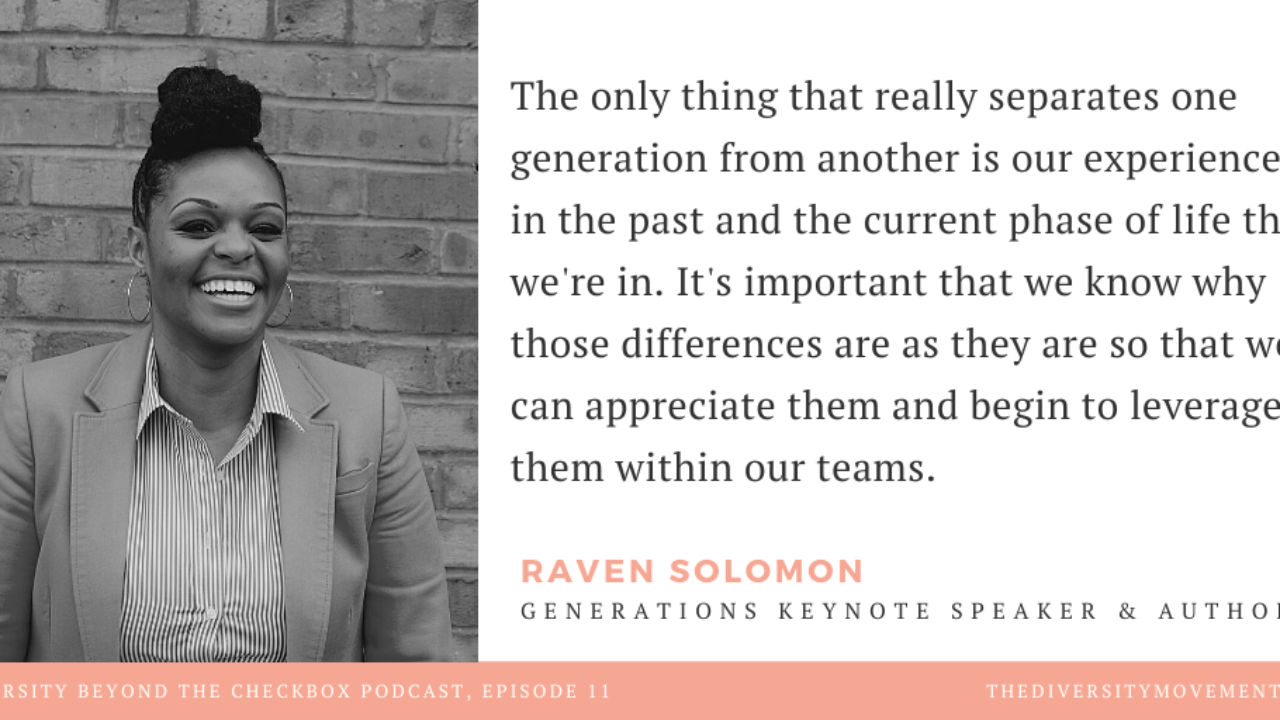
“If you think you're smarter than the previous generation, consider this: Fifty years ago, the owner's manual of a car showed you how to adjust the valves. Today, it warns you not to drink the contents of the battery."

--Derric Johnson

Ever feel like your team could double as a family reunion—with five generations, all with different styles, slang, and snack preferences? (Yes, someone did put a ham sandwich in the fridge next to the oat milk.)  

The subject of generational differences comes up often in my coaching and organizational training. 

Here are a few quick tips to help keep the peace, boost engagement, and maybe even learn to appreciate Gen Z’s memes and Boomers’ voicemails:

1. Communicate in layers.
Some prefer face-to-face or a phone call,  others love a good Slack message (what is that?) or emoji-laced email. Use multiple formats to make sure everyone’s hearing (and understanding) the same message.

2. Value experience and fresh perspective.
Invite the wisdom of seasoned staff and the creativity of newer generations. A mentoring moment could be just a coffee away.  I had a suggestion for the firefighters I was serving: ask a veteran and a newer recruit to share how they see the same situation differently—and find value in both.

3. Give purpose, not just a paycheck.
All generations want to know their work matters. Show the “why” behind the task—it motivates across the board.

4. Flex when you can.
Work-life balance looks different to each generation. When you allow a little flexibility, you build a lot of loyalty.

5. Laugh together.
Seriously. Humor is universal (even for the boomer generation–we might take ourselves too seriously)—just maybe don’t try TikTok dances at the staff meeting (unless you’re ready to go viral… for the wrong reason).

The big picture behind all of this is what John Maxwell says, “Put a “10” on everyone’s head.” That mindset is about choosing to see potential instead of problems, especially when someone is different, newer, slower, louder, younger, older, or just not like us.

Want more ideas to strengthen your multigenerational team? Let’s connect.

With you and your team,

Jan

Jan McDonald
Maxwell Leadership Certified Team
(Your friendly workplace translator and leadership guru)

“Comparison is the thief of joy."

--Theodore Roosevelt

At Sacred Stillness, the women’s retreat that I hosted last Friday, one of the topics that came up was comparison. One of the journal prompts for our time of solitude was “who or what do I compare myself to?” The answers were many;  other people, physical appearances, social media portrayals, other’s parenting, other’s vacations–the list was long. 

Many times, in my own personal life, comparison has stolen my peace and made me grumpy.  I  gave two of the very same presentations to different groups of people. One group had a great time and was very interactive and the other sat there like stones. Did I say something that didn’t make them want to talk? Why wasn’t the interaction as good as last time? Was I not good enough as another speaker might have been? Oh…shut…up, Norma.

Norma is the default voice inside my head that seeks to keep me average.  She wants me to remain “normal”, whatever the heck that means. I’m never enough for her.  She always likes to keep me in my comfort zone and she’s quite vocal when I attempt new things. That totally rocks her boat. Norma always chatters big time after I speak somewhere. She can be vicious and loves to compare me with others.  Most of the time, she is my own worst enemy. 

I asked a pastor friend to weigh in on this topic of comparison. These were some of his words, “Comparison leads down two darker paths; pride and covetousness. If we compare and think ourselves better, we become proud and haughty. Not good. If we see that we fall short and covet to have what others have, we may resort to illegitimate means to obtain what they have, or just become depressed, feeling that it is outside of our reach. It’s a dangerous game to play, unless you have a serious heart check about why you’re doing it.”  Great wisdom.

On the other hand, comparison can be good if we are doing it to learn from others. As leaders, if we compare ourselves to those who are farther along the path than we are, we can become better leaders. If we view others as better with the humility to learn, comparison can be beneficial.

How can we make comparison advantageous to us? 

First, remember our uniqueness. Our DNA is a 5-million-character code that paints a picture of each one of us. That same code has never existed and never will again. Each person has their own unique set of fingerprints. There has never been another created like each one of us and never will be. We are one of a kind. Special.

Second, since I am a Christian, Ephesians 1:4 tells me that Christ chose me before the foundation of the universe (Me? He chose me?) I didn’t have to clean up, get good enough or become someone other than me to be loved by Him. I am made in His image, He knows my short-comings and accepts me as I am.  Hallelujah! He also gave me my strengths, assets and talents…and there are many of them.   Ephesians 3:10 tells me that I am His Masterpiece! Leonardo Da Vinci painted only one Mona Lisa. God made only one me. And only one you. 

Thirdly, ask yourself if your best friends would say what you were negatively thinking or saying about yourself. Would they call you that? Would they say that about you? I don’t think so. Stop punishing yourself for not being somebody else.

Lastly, appreciate who you are and what you have. Write a list of all the good things about you and read that list daily. When your Norma gets out of control, read her that list.  Norma usually doesn’t argue with the truth. Don’t let comparison steal your joy!

You may have more ways to crush comparison of yourself with others. I would love to hear how you deal with your Norma.  I don’t believe we can have too many tools in our arsenal to build ourselves up to become all that we can be.

I will end on this note–comparison with myself brings improvement, comparison with others brings discontent.  Purpose to not let Norma steal your joy this season by remembering your own uniqueness.

Believing in you,

Jan McDonald
Maxwell Leadership Certified Team

"Until we deal with our "head trash" nothing is going to change."

--Jan McDonald

Can you believe it’s almost August? What happened to this year? It’s almost the last quarter of 2025 and how are we doing with our goal achievement? I’ve been reflecting on the progress that I’m making toward my goals. I’m closer to achieving them, but it’s about those competing commitments.  I’m not talking about things that cause setbacks that I can’t control.  Let me explain. 


There’s reasons why we don’t get our goals accomplished or make the progress we want. What normally happens is we define these things as reasons, the truth is they’re excuses. (Ouch!) Excuses are competing commitments. Let me give you an example.

I  looked back on my year and made excuses that I was really busy, or I needed to spend time with my husband, or I didn’t know how to move forward….blah, blah, blah. When I really thought about it–all of those things were excuses–or competing commitments. 

Maybe we really want or need to lose some weight, but tomorrow our friend is having a backyard barbeque. We can’t start until after that, so we’re going to eat ice cream tonight. Besides, think of all the great food we would  miss tomorrow.  Those outside excuses compete with our inner desired commitments. Some of those excuses are just head trash. We choose to let outside circumstances and conditions derail us. 
 

Choice happens in our minds. 


For sure, there will always be competing commitments. Some of them will be the same excuses we’ve had in the past.  At least that’s what I found in my reflection time.  Some of the things that are going to stop us from progressing toward our goals are predictable.  We know in advance that  there’s going to be more pot lucks and barbeques. We know in advance that we’re going to have days that are extremely busy.  Our car battery may die. Then, of course, it’s almost football season. 

I know that it’s easy for me to tell myself that I can do anything tomorrow if I am not up against a deadline. Most of the time, I’m pretty focused, but honestly, I can choose more fun things to do than work sometimes. 

 What are we going to do when these competing commitments arise?

We can’t make the decision to lose weight at the barbeque standing in front of the table of brownies, potato salad and chips. We can’t make the decision to go to the gym at 5:00 in the morning when it’s cold and raining. Let’s decide in advance what we’re going to do when competing commitments arise. 

When we begin to be driven by inner commitments and desires, rather than by outside circumstances and conditions, life will change. We’ll progress forward toward the goals to which we have committed.  We have to remove the head trash; those defeating thoughts that keep us from our desired lives.  We have to come up with a “move forward at any cost” contingency plan when we’re faced with a circumstance that competes with our desires and goals.

One of my contingency plans that came out of my reflection time is to focus on my desired life rather than instant gratification. I kick my head trash to the curb and picture in my mind who I will become or what I will achieve by doing the thing that is my inner commitment. It’s a great plan that works for me. Yes, it takes mental discipline, but that’s a topic for another email. 

How are you going to win when an competing commitment threatens to derail your goals? 

Winning (okay, most of the time,)

Jan

Jan McDonald
Maxwell Leadership Certified Team

For a friend to subscribe, here is the link

“You can’t always control what goes on outside, but you can always control what goes on inside.”

--Wayne Dyer

Can you tell what I’ve been speaking on lately? Anxiety is a major concern, not only is the workplace, but at home. Here’s a part of the presentation that I’m giving:  

𝑨𝒏𝒙𝒊𝒆𝒕𝒚 𝒕𝒉𝒓𝒊𝒗𝒆𝒔 𝒊𝒏 𝒕𝒉𝒆 𝒖𝒏𝒌𝒏𝒐𝒘𝒏. 𝑷𝒆𝒂𝒄𝒆 𝒈𝒓𝒐𝒘𝒔 𝒘𝒉𝒆𝒓𝒆 𝒕𝒉𝒆𝒓𝒆’𝒔 𝒑𝒆𝒓𝒔𝒑𝒆𝒄𝒕𝒊𝒗𝒆. When you find yourself feeling anxious–here’s 3 quick steps to help you change your perspective:

1.  𝑻𝒂𝒌𝒆 𝒂 𝒄𝒐𝒖𝒑𝒍𝒆 𝒐𝒇 𝒅𝒆𝒆𝒑 𝒃𝒓𝒆𝒂𝒕𝒉𝒔. Drop your shoulders. That gets oxygen to the brain and that calms the fight or flight response that anxiety wakes up. Until we calm the brain down, we can’t change our mindset. 

2.   𝑰𝒅𝒆𝒏𝒕𝒊𝒇𝒚 𝒘𝒉𝒂𝒕 𝒊𝒔 𝒄𝒂𝒖𝒔𝒊𝒏𝒈 𝒕𝒉𝒆 𝒂𝒏𝒙𝒊𝒆𝒕𝒚. Embrace it, feel it and know that it’s real. Caroline Leaf says, “Name it and then we can tame it.” When you name your emotions, you’re connecting the rational part of your brain with the emotional part. This allows you to think clearly and make choices that align with your values. Sometimes just taking the time to name the emotion calms the mind, because you are talking to the logical side of the brain to come up with the name that the emotional side of the brain is experiencing. 

3.   𝑫𝒐𝒏’𝒕 𝒋𝒖𝒔𝒕 𝒔𝒕𝒖𝒇𝒇 𝒊𝒕. When we stuff our emotions, especially anxiety, it shows up somewhere else. They get bottled up and then it’s like shaking a pop bottle and then taking the lid off. We don’t want it going all over. Worse yet, stuffing our emotions can wreak havoc in our bodies.

If you need some coaching through this, please let me know.

Peacefully typed,

Jan
Jan McDonald
Maxwell Leadership Certified Team
Don’t forget–early bird prices for Live2Lead! https://www.jan-mcdonald.com/l2l

For a friend to subscribe, here is the link:
https://www.jan-mcdonald.com/email/

https://www.jan-mcdonald.com
https://www.linkedin.com/in/janmmcdonald/

"Calmness is power. Say to your heart, "Peace be still."

--James Allen

What I’m going to share with you made no sense to me when I first heard it. When I used it in the height of rush hour traffic when I wasn’t sure of my destination–it worked! I was so amazed.

So I taught it in my workshop, “Building Inner Strength for Resilient Advocates.” It was one of their favorite tools to combat anxiety.

I don’t know about you, but when I get anxious, I fight it. I want it to go away at that moment! My hubby, Dennis, has been reading a book called “Beyond Anxiety,” by Martha Beck, because he has been diagnosed with anxiety.  (I have his approval to tell you this.) Martha says that rather than fight the uncomfortable anxious feelings, we embrace them. We embrace them like we would hug a scared puppy.  How would we calm a scared puppy? 

We would hold them close, but not too tightly, and we would pet them with loving strokes. “It’s okay that you’re scared. It’s okay, you’re safe here. There’s no danger, ” would be some of the things that we would say to them. 

We wouldn’t tell them it’s stupid to be afraid or to get over it, like I sometimes tell myself. That soothing puppy concept sounded so counterintuitive to me…until I tried it. And when the participants in my workshop tried it on something that was causing them anxiety, it worked. I could watch their shoulders drop and sense their calmness. At the end of the workshop, hands down, that was one of their big takeaways!

How does this work? When you are feeling anxious or fearful:

•    Acknowledge the fear. 
•    Ask yourself what is causing the fear; get curious. When we ask ourselves a question the logical side of the brain starts to work—that shuts down the emotional side. Yay! 
•    Sigh. Every time we breath out, the heartbeat slows a little and that is calming.
•    Shift your state to calm by speaking calming words (see below.)
•    Be gentle on yourself. Give yourself compassion like you would a scared kitty or puppy. 

Here are some calming statements: 
“Hello, anxiety. I see you.”
“You’re trying to keep me safe. Thank you.”
“But I’m not in danger right now.”
“I’m okay in this moment. I am safe.”
“I can handle this, one breath at a time.”

Yeah, I know, it sounds weird. Try it. Bring to mind a situation that causes you anxiety.  It could be something from work, a difficult conversation, driving in rush hour traffic, or even feeling overwhelmed. Breathe slowly, whisper quietly, and comfort yourself like you would a friend…or a scared puppy.  Let me know how it works for you.

Calmly typed, 

Jan

Jan McDonald
Maxwell Leadership Certified Team

For a friend to subscribe, here is the link:
https://www.jan-mcdonald.com/email/

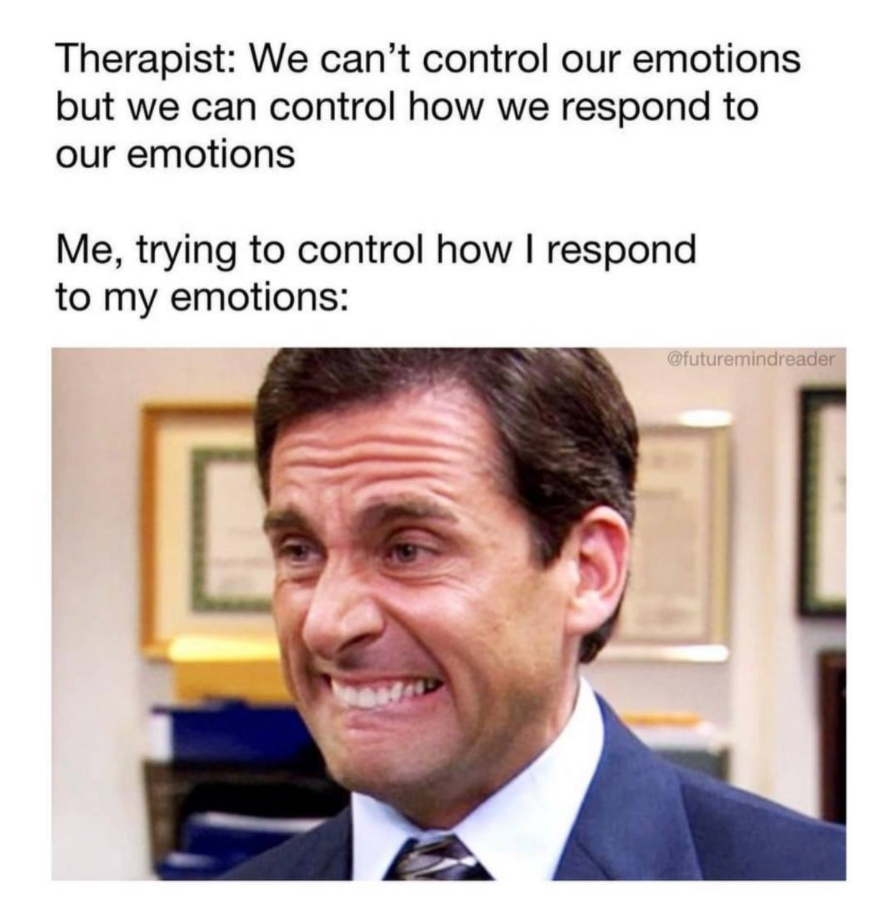
"Emotions are neither good nor bad, it's our thinking that makes them so."

--my humble opinion

The Latin derivative for the word emotion, “emotere,’ literally means energy in motion. Emotions are just energy moving through the body. They are not good or bad; it’s the meaning that we attach to them.

Emotions are the bodies reaction to your mind. For example, if you FEEL threatened, physically or psychologically that causes the body to contract—what we call fear. Strong emotions bring changes chemically in the body

The First Law of Thermodynamics (Conservation) states that energy is always conserved, it cannot be created or destroyed. In essence, energy can be converted from one form into another. What happens to emotions when they are not expressed?  When anxiety, fear, resentment, sadness or any emotion that cause us to dislike ourselves and/or others are stuffed instead of processed, they have to go somewhere.  Neuroscientists have come to the conclusion that stuffing results in a build up of energy in the body can manifest as stress. This can affect blood pressure, memory and self-esteem. Longer term, or chronic stress, can cause increased risk of diabetes, heart disease, depression, headaches, or anxiety disorders.
  
An emotion usually represents an amplified and energized thought pattern. If we allow the negative emotion to take us over, rather than identifying it and letting it pass, it often starts a vicious cycle—the thinking and the emotion feed each other. By dwelling mentally on the situation, event or person that is the perceived cause of the emotion, the thought feeds energy to the emotion which in turn energizes that thought pattern and so on. It can turn into a vicious cycle.

How do we defuse negative emotions?  I’m not a psychologist, and I’m not talking about the grief experienced from loss. but this is how I handle negative emotions:

1. Eat chocolate. I’m sure there’s a chemical in chocolate that makes you feel better.  Just kidding. The real #1 is to step back and identify it. Get curious. What is the emotion?  What is causing the emotion?   When I take  the time to name the emotion, it usually isn’t anger at all, but fear, rejection, disappointment, frustration, self-judgement, etc. Take the time to ask yourself enough questions to name it.  Naming it removes some of its power. 

2. Tequila shots and Moosehead beer. NOT! That’s the old me. The real second step is to FEEL the emotion. The goal is to feel it; not make it go away.  I know that sounds crazy, but  Dr. Leaf says, “Feeling is healing.”  Be your own best friend. If you were down, your best friend wouldn’t tell you to “just get over it.” They would validate your feeling and empathize with you.  Give yourself that same compassion for the situation you are in. (Remember, what we resists, persists and even grows.)

3. Blame someone else. That’s my fave. The real #3 is nobody or no thing makes me feel an emotion. The emotions are my own making. I even hate to write that. Think about it. My husband likes to finger tap, on the steering wheel, on the back of my chair, on the coffee table with his foot…he just taps. It is so irritating to me. BUT, someone else might not even notice it.  Flying causes extreme anxiety in many people. I don’t understand that. What drives you crazy may have zero impact on me. 

4. Deny it. Yeah, that’s like me telling you to not think about the pink elephant in the room . You’re thinking about that now, aren’t you? The real #4 is to accept it. Embrace the negative feeling and discover the message that it has for you.  Ask yourself, “What does this mean?” and “What must I do with it?” Are you able to take action on whatever it is that is impacting you?  I have found that most things that get under my skin are those things that I can’t control. So I just have to feel the pain, and let go.  

I feel better just writing this. Especially, because much of what is bothering me today is out of my control. What I can control is my response and how I live in my own world.

Naming those pesky emotions, 

Jan

Jan McDonald
Maxwell Leadership Certified Team

For a friend to subscribe, here is the link:
https://www.jan-mcdonald.com/email/

"No one has a problem with the first mile of a journey. Even an infant could do fine for a while. But it isn't the start that matters. It's the finish line."

--Julien Smith

What? It’s June already?  What happened to the whole first half of the year. This thought prompted me to look more closely at my goals. Some goals are right on; some could use some extra work. 

There is a teaching in the Maxwell Bible in 2 Chronicles.  John’s commentary is titled “Leaders Need to Finish Well.”  Four of the kings written about in Chronicles started their reigns really well. Their people benefited from their success and fame, but the kings let their good times go to their heads and their monarchy finishes were not so pretty.

Here are some reasons for their poor finishes:

1. The people drifted away from their calling as spiritual leaders and their jobs became routine and ho-hum rather than executed with their original passion.

2. The kings overestimated their own personal importance and allowed themselves to become exceptions to the rules. 

3. The kings grew blind to their weaknesses and refused accountability. 

4. The kings did not raise up, train and empower great leaders to follow in their original values and passion. If we are to leave any lasting legacy, a successful passing of the leadership torch needs to be in place.  They didn’t create a strategy to have the right people in the right place at the right time. 

I remember writing my book,  “Fruitful Leadership; Leading by The Fruit of The Spirit.” When I began the study, which became the book, of the Fruit of the Spirit and daily posted  my thoughts on the private Facebook page–I felt called to do it. I was very excited about it! I wrote when I didn’t feel like it because I felt such a passion for what I was learning. Really…what better leadership characteristics to model than those of the Spirit. Those traits are love, joy, peace, patience, kindness, goodness, gentleness, faithfulness and self-control.
 

I do the very best I know how, the very best I can,
and I mean to keep on doing so until the end.

Abraham Lincoln

Then came the editing part–boring. But I didn’t want to drift away from my original calling and passion to turn out something less than my best.  I wanted finishing the book as a writing of worth, beauty, elegance and, hopefully, impact.  Thinking about it this way gave me new resolve and excitement, which pulled me through the editing. My editor held me accountable and kept me humble. Geesh, I paid her to tell me where my writing wasn’t done well! 

I published the book in 2019. It’s not a best seller, but I got a text last weekend from a reader who is still turning to it for devotionals. Pushing through the editing was worth it to have the impact that I believed the book could have.

We’re halfway through 2025. Have you revisited your goals lately? Hopefully, most of you look at them daily. 

How’s your passion?  Do you know what your blind spots are?  Do you feel like your life has become ho-hum?  Are your drifting from your calling?  Are you raising up other leaders to continue your legacy?  Let me help you if  you need it,  so you can finish 2025 well!

Finishing 2025 well,

Jan McDonald
Maxwell Leadership Certified Team 

For more leadership or growth hacks, follow me on Facebook @janmariemcdonald


For a friend to subscribe, here is the link
https://www.jan-mcdonald.com/email/

Where Should We Send The 5 Simple Steps to Maximize Your Effectiveness Guide?