Your Path to Breakthroughs: Insights from Jan McDonald

From hopeless drunk to 30 years sober and helping hundreds of individuals and organizations unlock their ‘and then some’, I distill all the lessons gained from those transformational life experiences and share them with you in this space.

I invite you to explore these insights as way to help you breakthrough the challenges that are stopping you from becoming who you want to be.

Categories

Download the FREE Guide

5 Simple Steps to Maximize Your Effectiveness

"Success is not final, failure is not fatal: it is the courage to continue that counts."

--Winston Churchill

My friend Les Brown says “Too many of us are not living our dreams because we are living our fears.” We may be worried about what other people will say. And it’s true, we may well be laughed at or criticized by those who  lack our courage. But those who never made a mistake or never failed never tried anything new. And there is only one way to avoid criticism: do nothing, say nothing, and be nothing. And it’s obvious where that will lead. 

It doesn’t matter how long it takes us or how slowly we go, as long as we don’t give up. As long as we don’t stop.


I came across something called Rules for Being Human that apply to all of us at one time or another:

Rule #1: You will learn lessons.
Rule #2: There are no mistakes–only lessons.
Rule #3: A lesson is repeated until it is learned.
Rule #4: If you don’t learn the easy lessons, they get harder.
Rule #5: You’ll know you’ve learned a lesson when your actions change. 

Everyone fails at some time or something. The question is not will we fail or make mistakes, the question is how will we respond to them. The big plus of failure is that every time you fail and learn from it—it grows you up. It makes you better. You grow mentally. You get smarter. You feel better about yourself every time. Failing and making mistakes are not such a big deal. You try bigger things. It turns into an amazing transformative cycle where you begin to believe big about yourself. 

John Maxwell says “If we learn to embrace a new definition of failure, then we are free to start moving ahead–and failing forward.”  That is, if we never give up!

Failing forward!

"In every adversity, there lies the seed of equivalent advantage. In every defeat is a lesson showing you how to win the victory next time."

--Robert Collier

There was a family that had twin boys. Worried that the boys had developed extreme personalities – one was a total pessimist, the other a total optimist – their parents took them to a psychiatrist.

First the psychiatrist treated the pessimist. Trying to brighten his outlook, the psychiatrist took him to a room piled to the ceiling with brand-new toys. But instead of yelping with delight, the little boy burst into tears. “What’s the matter?” the psychiatrist asked, baffled. “Don’t you want to play with any of the toys?”

“Yes,” the little boy bawled, “but if I did I’d only break them.”

Next the psychiatrist treated the optimist. Trying to dampen his out look, the psychiatrist took him to a room piled to the ceiling with horse manure. But instead of wrinkling his nose in disgust, the optimist emitted just the yelp of delight the psychiatrist had been hoping to hear from his brother, the pessimist. Then he clambered to the top of the pile, dropped to his knees, and began gleefully digging out scoop after scoop with his bare hands.

“What do you think you’re doing?’ the psychiatrist asked, just as baffled by the optimist as he had been by the pessimist.

“With all this manure,” the little boy replied, beaming, “there must be a pony in here somewhere!” 

I love this story.  It reminds me that I need to look for the good even in the trying times.  I remember how trying the COVID lockdowns were.  Maybe you remember that I experienced a mental meltdown one afternoon–I grabbed my hiking boots and raged out the door for Badger.  I hiked with all of my might and about 12 minutes in, when I could barely breathe anymore–and I started to laugh.  I thought to myself, “Wait a minute, I teach and coach on this…on having a good attitude in the midst of a lousy circumstance.” 

There’s a gap between the knowing and the doing and I needed to begin the doing…period.

I realized that I couldn’t write this stuff for you if I wasn’t walking my talk. A huge part of leadership is leading by example…and I certainly was not a stellar example.  I started looking for the ponies…daily.  Here are some that I found back then: Dennis was considered essential and was still working. I connected by Zoom with those I love. I learned how to play games online with others. I also developed the skills to hold training workshops on Zoom.  I was (and still am) extremely healthy. I worked out with WalMart resistance bands and that helped my stress level.  Spring was more beautiful that year because I had more time to appreciate it. My faith in God grew. 

I found out some things about myself, too.  I need people more than I thought. That’s a huge “aha!” for a task-oriented person. I also learned that the feeling of powerlessness can wreak havoc on my attitude. As a recovering control freak, I knew that, but the lockdown was an intense reminder.  If I can’t control it, which is most of life right, I needed to not stress about it. 

What prompted this email was a memory that popped up on Facebook from this time in 2020.  Seeing that memory was a great reminder for me that I still need to look for ponies in the pile of manure that I may experience. 

Think about it–they are in that pile. 

Still learning to dig,

"Nothing so conclusively proves a man's ability to lead others as what he does from day to day to lead himself."

--Thomas J Watson

In the last couple of weeks, I have had these questions come up. “What can I do to have more influence over my supervisor?”  “How can I tell my boss he needs leadership training?”  “How do I convince people they need leadership skills when they don’t think they do?”

These are great questions. When one is used to being the leader, being told what to do or how to do it isn’t very comfortable. I’m in that position now and it’s an interesting feeling. As a task-oriented person, and a former CEO, it’s difficult to serve with people who take forever to make decisions. I think that my way could be a better, faster way, often. (and maybe it’s not, either:)  I’ve not had to lead from within for a long time and I’ve made some great discoveries. 

I read John’s Maxwell’s book, “360 Degree Leader.” The book is about developing the ability to lead from anywhere in an organization. So let me give you some answers to those questions from that book and from my experiences: 

1. We need to lead ourselves first with excellence and then model that behavior. Remember, we can’t give what we don’t have, AND we don’t get who we want, we get who we are. Great behavior influences those around us for the better.

2. We need to understand what is important to our leader. What is the mission of the organization from which your leader operates, or should? Really try and connect with your leader by investing in that relationship. John says to be a champion of what your leader desires. 

3. We aren’t always right. WHAT? Yes, keep an open mind and be willing to see your supervisor’s perspective. If it is not clear what is desired, ask questions with all gentleness and respect. Show curiosity and an eagerness to learn. Understand that your leader has the overall organizational picture in mind, not just your current situation. 

4. Know when to push back and when to back off. We must read the atmosphere of our workplace to determine the best timing to confront or wait for a better time. This doesn’t mean we never bring the situation up again, it just means we discern the right time. 

5. Be known as the “go-to” person. Develop the ability and willingness to tackle the tasks given us without complaining (or allowing our judger self to arise:) Make sure our body language agrees, as well, when we say, “Sure, I’ll do that,” even if the task is not our job description.   

6. Lastly, on this list anyway…and maybe it should be first. Make it your goal to make your leader successful. Be a team player and lighten your supervisor’s load–when he/she is successful, the whole organization succeeds. 

Yeah, if you were one who asked the questions, you probably didn’t want to hear any of this. We already know, especially if we have teenagers or spouses…or bosses, that we are unable to change anyone else. Transformation starts with me.

Go ahead, model great leadership behavior for those around you. It becomes contagious. If those who lead you are unable to “get it,” your own life will change. You will be transformed in the process and that, my friends, is so worth it. 

Thank you for asking, 

Jan

"Failure is a gift if you don't give up and are willing to learn, improve and grow because of it."

--Ryan Leak

Good morning, 

I find when coaching that the fear of failure holds people back from reaching their potential. That fear keeps their goals and dreams out of reach because many don’t want to take risks. 

Failure and success go hand in hand. Consider this list of “failures:”

  • Babe Ruth–714 home runs–struck out 1330 times.
  • Walt Disney–he was fired from the newspaper where he worked because “he lacked imagination and didn’t have any good ideas.”
  • Albert Einstein–didn’t start to talk until he was four, couldn’t read until he was 7, and was labeled mentally handicapped.
  • JK Rowling, The Harry Potter creator– was broke, divorced, depressed and a single mom on welfare while writing her first book.
  • Michael Jordan–didn’t make the varsity basketball team in high school.  He was crushed because his best friend did make the team.


What would you do if you knew you couldn’t fail?
 
I am looking for a few growth-minded, life-long learners that want to be part of a community that wants to grow and develop.  Individuals who want to create comradery with others who want to move forward but would like some accountability will enjoy this group.  Do you need a place to celebrate your wins, share what you are working toward and maybe need some fresh ideas?

I’m starting a special group for just that. We’ll be doing through Ryan Leak’s book for 6 weeks together. We’re going to learn that failure is not our enemy, but actually our friend and can actually lead to greater opportunities. We’re going to encourage and inspire each other. If you need some coaching, I’ll be there. 

This co-hort will gather at noon, by zoom, beginning May 8.  Your investment, besides the book, will be $199.  

Please email me and let me know you’re interested or if you have questions:  [email protected] 

“The imagination is literally the workshop wherein are fashioned all plans created by man.”

--Napolean Hill

Imagination is what allows us to create a life we wish we had.  By exercising that magnificent mental muscle, we can change our life’s outcome through our creative imagination by taking a moment and really imagining what it is we want – with clear details and practicing this everyday until what was once an idea becomes our reality. 

Without imagination we wouldn’t have all of the things around us.  Take the light bulb; Thomas Edison worked diligently on perfecting a commercially manufactured light bulb.  He imagined that it was possible and eventually achieved success.  He has been quoted as saying “I have not failed. I’ve just found 10,000 ways that won’t work.”  What if he had not used his imagination and believed in the possibility? 

When my coaching clients learn and practice this, they have amazing breakthroughs!

Napolean Hill devotes a whole chapter to imagination in his book, “Think and Grow Rich.”  While we can imagine all sorts of fabulous dreams and scenes in our minds, I think we forget that we can use our imagination in a negative way–when we worry.  Worry is when we focus on a future negative. We often focus on and imagine those particular negative scenarios taking place in our lives.

And the funny thing is, those events, circumstances, and conditions haven’t even transpired yet, and we don’t even know if they ever will.  Ninety percent of the things we worry about never happen anyway.  But we so often worry ourselves sick (quite literally), imagining all the possible negative scenarios that could play out.

What are you worried about today? If you stop for a moment and reflect on what it is you’re thinking about, are you focusing on what it is that you want in your life, what it is that you desire, or are you focused on the exact opposite; on what you don’t want to happen? 

As Napoleon Hill said, and I truly believe, “your only limitation in life is in the development and use of your imagination.” Why not develop your imagination and focus on what you truly desire in your life–because what we focus on grows and multiplies. 

Imagining a warm, sandy beach in 2024,

"Embarking on a vision without values is like driving a windy road without guard rails."

--John Maxwell

I often help companies and organizations flesh out their values because it sets standards and expectations by which employees work. When team members know specifically how they are to show up at work, this helps with engagement and productivity. 

When coaching people and chatting with individuals, I have discovered that most have not taken the time to discover their  core values.  

Values describe how we want to behave in an ongoing basis. They reflect what we want to stand for in our lives. Values provide a foundation for our relationships. They are principles or standards by which people live.  We often compare them to a compass because they give us a direction and guide our life’s journey.  They help us create the future that we want to experience. 

When the way we think, speak and behave match our values, life feels very good – we feel whole, content, in our power. Life feels full of meaning and purpose. But when these don’t align with our personal values, then things feel… wrong. Life feels uneasy. We feel out of touch, discontented, restless, unhappy.

Here’s how values work. If one of your values is honesty and you are in a relationship where that is not valued, there’s no trust in that relationship. How will you feel about that relationship?  How long will that relationship last without trust?  On the other hand, if there is honesty in that relationship, you feel good about that aspect of the relationship.
 

How can we discover our values?  Here is a way:

For one week, take a few moments each day to write down 3 things: 
•    That made you feel good
•    That made you feel bad
•    That made you feel useful
•    Others did that you admired
•    Others did that you disliked

Looking at your answers, notice the themes that come up. What do you want to do/experience more of? Less of? Upon reflection, what specific qualities, beliefs, and standards for behavior are at the root of these themes and desires?  Then write these answers down. 

I know, this takes reflection and time and if you need some help, I can be available for that.  But can you imagine how it will feel when you have definite values that define your behavior and actions. They will be your true north.  AND if you and your significant other do this together, and you have shared values, how will that make your relationship feel?  AND if you don’t have a significant other yet, the more reason to discover your values and write them down. It will give you a standard to which you can hold your incoming relationships. 

Take some time and discover your values as they are the foundation for finding your life purpose, and they remind you – and others – who we truly are. 

Make it a great week, 

Jan

"Nothing will cause more anxiety than trying to control that which we can't."

--John Maxwell

When we sold our home in Grandview mid-July of 2019, we had the hardest time finding a home in Tri-Cities that we liked, in the price range that we desired. We had looked at 46 homes by the first week in August and none of them were “The One.”  The date for the new owner of our old home to take possession was August 30th.

One of the distractions during a crisis (and not knowing where I was going to live felt like one) is fear of the unknown. I had that going on big-time! What if we don’t find a place? Do we rent? Geesh, I don’t want to move twice. And if we do rent, where?  Do we settle for the home that we already toured that we could live in after massive renovation?  Do we need to go up in price range? I don’t want to be house poor. Do I even want to look in Pasco?  I spent a ton of time looking on Zillow. I swear, I knew the details of almost every home in there.  I tried to work this “crisis” every which way in the my head. My thoughts were like a horse running around and around in a corral. Talk about anxiety!!  

The night before we were going to look at more homes, I finally through up my hands in “Whatever!” mode. I gave it up. The only things I could control were my attitude and to continue looking at homes. The moment I surrendered was the moment my anxiety lessened.  AND…


The very next morning, we found “The One” in Pasco…and we hadn’t even been looking there.


What can we do when we don’t have all the answers?  Here are some tips that I learned from participants in a webinar series I taught in 2020 called “Leading Through Crisis:” 

1. Surrender the unknown. Let go and accept where you are. As a person of faith, I give it to God–He’s up all night anyway, probably working on my challenge.  No sense in both of us losing sleep. 

2. Focus on what we can control and then take action. Procrastination fuels anxiety, so take the next step, whatever that is…and then celebrate that step forward, no matter how tiny. 

3. Ask more questions. Look at the situation from different angles. Engaging in conversations with others can give different perspectives and can help us think outside the box.

4. Write about the situation. I have found that writing challenges down on paper gives me clarity. The emotions surrounding the unknown are clarified, the fears are black and white, and the challenge seems smaller.

5. Focus on the big picture based on what we know.   In my life, things always seem to work out for me. I don’t mean that to sound arrogant, but if I look back on my life, I can see that I have been divinely guided. I know this…but sometimes I forget. Sometimes the control freak in me comes out of the closet and tries to organize EVERYTHING.

I am sure that you have your ways of thriving when you don’t have all the answers–I hope that you will share them with me. The arsenal  for coping can never be too big in these ever-changing times. 

Still don’t have all the answers,  

Jan

“Where you focus goes, there your energy flows."

--Tony Robbins

I was reading about Solomon in the Bible book of Ecclesiastes.  He was one of the wealthiest kings in ancient times and he was considered brilliant intellectually. Solomon could buy anything he wanted. He was world famous for his success and threw great parties. Legend says that he was handsome and he acquired 700 wives. He had to have tremendous energy for that alone. Solomon was powerful and famous, yet none of his “stuff” satisfied him.  His writings tell us that he viewed all of his worldly acquisitions and accomplishments as “vanity and chasing after the wind.”

His name means peace, yet he had none of it as his energy flowed toward goals that had nothing to do with his purpose of  leading his country well.  Solomon lacked focus and felt scattered. That old quote is still true, “If you chase two rabbits, both will escape.” Rather than focus on his purpose, he allowed his heart to  drift. He got distracted. 
 

At some point, Solomon got sick and tired of the busyness and the chase.  He slowed down enough to refocus. It took the whole book of Ecclesiastes and a long time,  but Solomon’s reflection brought him back to His Creator’s purpose and mission for his life.  That is what really mattered in his life.

That’s me sometimes–chasing after the wind. I am reminded of a t-ball game where the little girl in the outfield was chasing the butterfly rather than the ball. The butterfly was so pretty. “GET THE BALL!” screamed her coaches and her teammates. That brought her back to reality.

How about you? Were you chasing butterflies, like me, these last months?  Did you say “yes” to commitments that involve other’s goals and dreams rather than yours?  What is left on your “to-do” list that you promised yourself you were going to finish? Did you handle that tough conversation or improve your part in that important relationship? What else did you procrastinate?

GET THE BALL!

Stop. Breathe. Get quiet and think. Nine months of this year is gone and before we know, it will be June and we’ll be in the same place then as we are now. Refocus. What do we want to accomplish? Who do we want to become?  Let’s stop chasing the wind and move our energy in the direction of our purpose or calling. For me, just advancing in the direction of my goals and purpose seems to eliminate distractions.  Yes, these last couple years have been difficult, but we can’t let it distract and paralyze us. 

What is one step that you can take in the direction of your dreams and desires. Go ahead, take that one. It will position you to take the second one…and so on. You can do it!

I really wrote this for me…and it made me think and refocus. Thank you for listening. Let me know if it helped you, too.

“Attachment is the source of all suffering."

--Buddha

Attachment is a feeling that binds one to a person, thing, cause, ideal, or the like. It is the state of being attached. Many of us have new goals for 2024 and we’re excited about them! If we are going to achieve those goals, we’re going to have to make some changes. If we think the way we always have, we’ll always get what we’ve already gotten. 

Some of those changes may not be obvious, so we’re going to have to do some reflecting and deep digging to find out what needs to be changed…or what needs to be let go of. What are we attached to?  We have all sorts of commitments, ideals and beliefs to live the life that we are currently living. If we want to change our current results, significant change is necessary.  “That’s just the way I am” is not going to get improved results.
 

“We don’t attach to people or things, we attach to uninvestigated concepts that we believe to be true at the moment.”  Katie Byron
 

Ouch!

Since weight loss is the number one New Year’s Resolution, let me use that as an example. If we are going to lose weight, we’re going to have to change the way we shop, cook, the way we eat, and what we eat. We may want to add exercise to make it easier.  

Attachments are sneaky, too, and I still struggle. Even today, when I went grocery shopping, old attachments and accompanying thinking surfaced. “It’s New Year’s weekend, I can have Luau Potato Chips, ice cream and maybe even Life Saver Gummies–then start all over with a healthy diet on Monday!”  Wait, what? Where did that come from?  
 

If we want to enhance our marriages, discover new and better relationships, have richer communications with our kids, make more money, or whatever it is we desire, we will have to be open to new and improved ways of thinking and relating. If we are attached to our old ways, we we won’t be able to see the new opportunities or mindset shifts that can be ours.
 

AND we don’t stay the same, we move forward into growth or backward into sameness and/or safety.  As my friend and mentor, Paul, says, “Nothing in the universe stays the same–it either grows or disintegrates.” 

So how do we unattach? Here’s what I have done (and am still doing):
 

1. Identify what you are holding onto that isn’t serving you anymore. What is not working in your life?  What is your perception of what is holding you back?  It’s usually something that follows the word “because.”  I can’t do this, because…. This won’t work, because…  That will never happen, because…Listen for those sentences. 

2.  Lighten up. I can tell you one thing that needs to be dumped and that is your past. Harvest the good from your past and let go of the rest. Let go of old mindsets, self-created illusions and assumptions that no longer serve you.  Leave old resentments, judgments  and being offended behind–they weigh more than you imagine. (That will be your first 10 pounds of weight loss. You’re welcome:) 

3. “Stop grasping at the things that are Mine.”  Yeah, God told me that a couple of years ago and I’m still trying to get it. Open your grasp and let go of things that you can’t control.  Let go of the way you’ve always done everything and be open to change. Get adventurous! Venture out of your comfort zone.  


When was the last time you tried something new?  You  have choices. You  can choose to change and infinitely enhance your life. You can live a life  of joy and adventure, or you can step back into “That’s just the way I am.”  And 2024 will be here before you know it, and everything will be the same as 2023… or even 2022 if we don’t let go of old attachments.

Does this email sound tough and mean?  I wouldn’t be writing about this if I didn’t have personal attachments to deal with. Just when I think I have arrived, Attachment #257 rears its ugly head.  

AND I know you. Your potential is limitless and you wouldn’t be on this email list if you didn’t want something more. I believe in you. You have so much more value than you are giving yourself credit for. The world needs all of your gifts and talents…badly.  Not only that, but you deserve to live the freedom that living without attachments will bring you. 

"You cannot be the same, think the same, and act the same if you hope to be successful in a world that does not remain the same.”

--Malcome Gladwell

OMGoodness, why doesn’t anyone do it my way? 

Okay, that’s not always true, but I seem to be getting reminded of how inflexible I can be when what I have planned is interrupted.  Dennis scheduled a surgery on a day when I had 2 coaching clients. I had a responsibility at church where my only direction was “you do it.” So I had “my way” all planned and, of course, it didn’t happen that way.  There have been a couple other events that haven’t gone the way I planned. 

My first reaction in these situations is usually anger.  As I processed these events, I realized the emotions were not always anger. Sometimes the feelings were disappointment, hurt feelings, fear and/or astonishment.  

I know that I can’t control some circumstances, however, I can control my response. If it seems like I’m writing a lot about this, I am.  I think I will continue to be tested here until my response is to let it go. Feel the feeling, and then just let it go rather than having it ruin an hour or two of my day.  

As I thought about this, John Maxwell’s book, “Leadershift,” came to mind. If we want to be successful as leaders, we need to learn to embrace uncertainty and make shifts continually.  That’s so true, isn’t it? Our world is changing at such a rapid pace, we need to be flexible.

How to make these shifts?  Here a few steps from John’s book: 

1. Continually learn, unlearn and relearn. If we always do what we’ve always done, we’ll always get what we’ve always gotten. We need to be willing to let go of what worked yesterday and grasp new ways of seeing and doing things.

2. Yesterday ended last night. We need to focus on today. What we did in the past may have been fantastic but it probably won’t help us win today. 

3. Keep growing. There’s no finish line when it comes to improving. As long as we are enlarging ourselves, our influence increases and so does our impact. 

4. Move forward bravely in uncertainty.  “Life expands or shrinks in proportion to our courage.”  John covers this step with that quote perfectly.

As I reflect one more time, and look at the uncertainty of the future, I realize I better get more comfy with change. Not only that, I better attempt to anticipate what might come, so I can be ready. Hmmm…looking at life as an adventure to be lived full out is an affirmation of mine this year.  Hopefully, the next time I get to take this test I will pass. I’ll keep you posted:) 

Even Helen Keller said, “Life is either a daring adventure, or nothing at all.”  Now, that’s a flexible perspective.

Gracefully bending

"Leaders Add Value by Serving Others"

--John Maxwell

Many leaders view leadership the same way that they view success. They hope to go as far as they can to achieve the highest position that they can. Many times people do whatever it takes in the process, no matter who or what is negatively impacted.

The Law of Addition suggests otherwise.  John Maxwell quotes, “I believe the bottom line in leadership isn’t how far we advance ourselves but how far we advance others.”  Valuing relationships is the foundation of leadership. 

All relationships either add to or subtract from a person’s life. If you can’t readily say “yes, I add to others’ lives”–then you may be a subtractor. I think people subtract from others unintentionally. They really don’t realize their negative impact on others. It happens because we are naturally selfish.

We need to become intentional about valuing and adding to others, because if we are subtractors and don’t change, the subtraction can turn into division or maybe misconception. 

I remember a time I evaluated a staff member. I always asked them if there was anything in my leadership style that they are were not excited about. Most of the time I didn’t like the answer, because it required change in me. This time was different. She told me that she noticed that I had been taking more time to come out of my office to just come and mingle. She said that made it easier for everyone to check in with me and she felt like I cared more. 

Okay. I had an open door policy to my office, but somehow it served them better if I came out of my little hovel to them. I had no idea.

How can you make things better for the people who follow you?  Better yet, how can you add value to those that are closest to you? For me, sometimes that is the most difficult.

Make adding value to others part of your lifestyle. That’s what it takes to become a leader whom others want to follow. “Leaders find a way for the team to win.” John Maxwell

Leaders make things better for the team. Team members are excited to play the game, whatever that is in your organization, because the team knows that the leader has done everything that they can to enable the team to win.  

"Gratitude is the healthiest of all human behaviors. The more you express gratitude for what you have, the more likely you will have even more to express gratitude for."

--Zig Ziglar

What does gratitude have to do with leadership? Think about it. Have you ever worked for a boss that wasn’t grateful for your contributions you made to your company? How did that make you feel?

Studies have shown that companies that “excel at employee recognition” are 12 times more likely to enjoy strong business results. Leaders who are grateful for and acknowledge employee contributions create a culture of gratefulness that trickles down through the whole organization.

Inc.’s Geoffrey James wrote “If you’re not exercising this emotional muscle, you’re probably setting yourself up for failure. I’m utterly convinced that the key to lifelong success is the regular exercise of a single emotional muscle: gratitude.” Research from the Harvard Business Review draws the same conclusions: appreciation matters.

While googling articles on gratitude, here are a few of the many benefits that I found about having an attitude of gratitude:

  • Improves physiological and emotional health
  • Opens the door to more relationships AND creates trust in relationships
  • Improves self-esteem and increases mental strength
  • Reduces pessimism and aggression
  • Gives you more to be grateful for, as Zig says above
  • Is a magnet for miracles

Try being grumpy and grateful at the same time. Personally, I have found that being grateful, even during hard times, makes those hard times “seem” easier through which to travel.

This suggestion came from an article in Forbes. “A five-minute a day gratitude journal can increase your long-term well-being by more than 10 percent. That’s the same impact as doubling your income!” WOW!

Thanksgiving is the time of year when we usually start to list things that we are grateful for…and there are many. My list begins with God, my family, my perfect health, my friends, my business, the country that I live in, and YOU…I could go on for a long time. It’s time to create a more consistent habit of writing down those things for which I am grateful. 

Being grateful not only benefits me, but it has a positive influence on those around me. AND leadership is influence.

What is on your gratitude list?  I hope you take some time today to list those things that you are thankful for.

I wish you a Happy Thanksgiving and a blessed time with family and friends

“Once we truly know that life is difficult--once we truly understand and accept it--then life is no longer difficult."

--Scott Peck (The Road Less Traveled)

When I was being coached this week, it seems I needed a reminder. I was talking (whining) about a challenge I was in the middle of and my coach said, “Everything worthwhile is uphill.”  THEN, she texted me an exerpt from John Maxwell’s book, Developing the Leader Within 2.0. Yep, I’ve taught right out of that chapter on Problem Solving.

Heavy sigh. Here’s what I needed to learn AGAIN:

Leaders don’t see problems as problems because problems hold potential benefits. Like what?

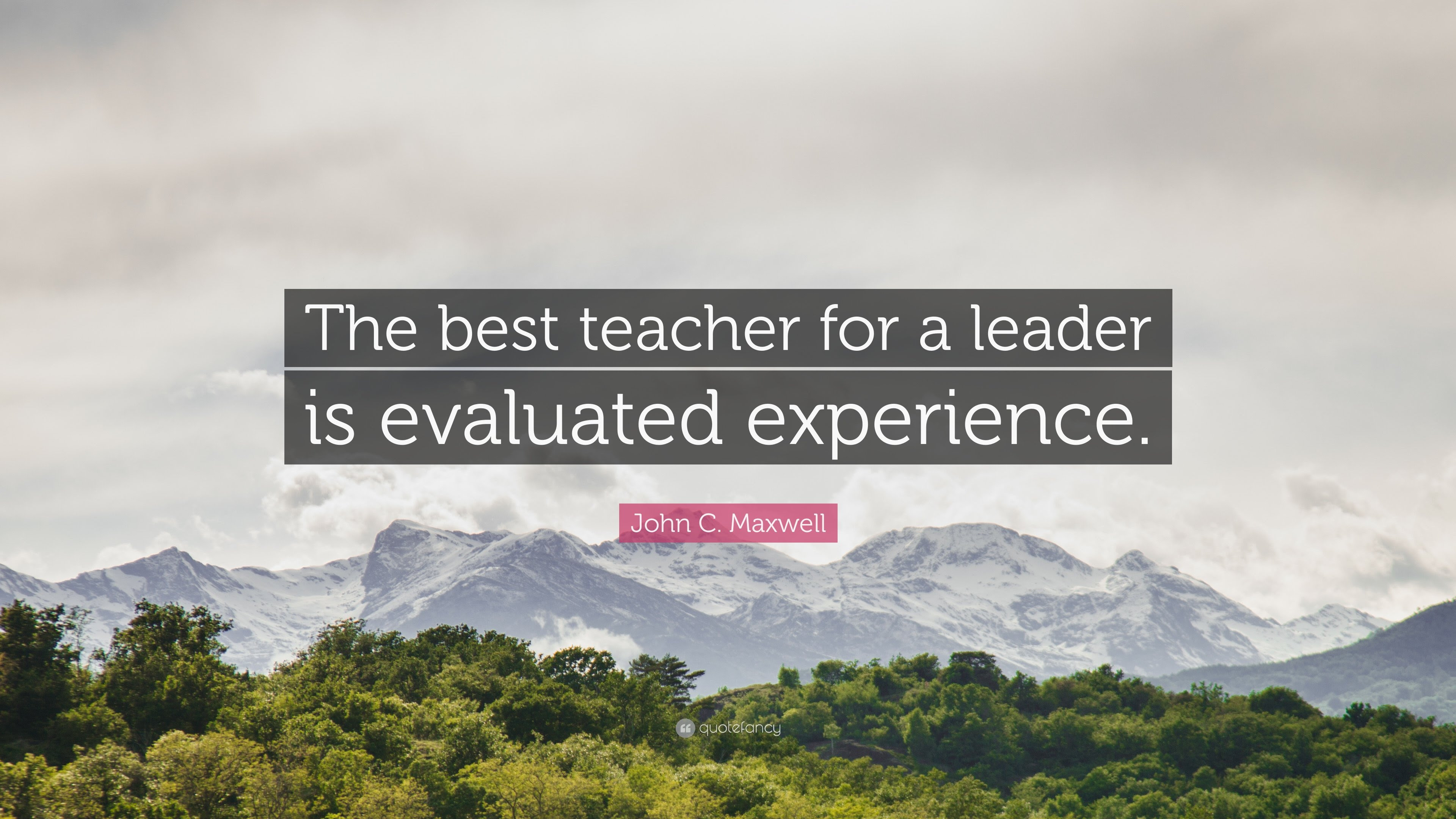
  1. Problems introduce us to ourselves. It’s not the good times, it’s the difficult times that define the leader.  We believe there is always an answer. Problems handled well make us better. Problems promise to make us better. Experience is not the best teacher, evaluated experience is the best.
  2. Problems introduce us to others.  If we are not connected to our followers, we’ll be distant from the problems. We can’t retreat from our people in difficult challenges. Can our teams help us solve problems?  Or do our teams become a liability during times of trial?  Do we have problem magnets?  Problem exploders? Do they give up in the face of problems?  Leaders model good attitudes and problem solving skills for their followers so they can learn those skills. 
  3.  Problems introduce us to opportunities. Einstein says, “In the middle of difficulty lies opportunity. (The problem with that is that you don’t get the opportunity until you’re in the middle of the problem:)  The most effective leaders view problems through a lens of opportunity. If you look at it at a problem as an opportunity, it slows you down mentally from seeing the problem as a problem, because you are looking for the opportunity in the problem. 


There’s way more to that chapter than I’m writing. Suffice it to say that the challenge that I was having introduced me to my old selfish self. The challenge reminded me that one of my affirmations of 2023 is to live life as an adventure. Adventures include problems that rise up out of nowhere and impact my schedule. I have a choice–I can view the problem with a bad attitude and get discouraged, or I can look for the positive. 


Still learning with you, 

Jan

"I took the time to feel melancholy."

--Me

I paid off Truffle’s medical bills yesterday.  It ended up being more than I anticipated, which frustrated me. I explained to the pet insurance lady, Danielle,  that I understood it to be less.  She pulled up all the bills and she was right. It was so annoying. I was thinking of my best retort when she looked at me with sad eyes and said, “I just paid off my dog’s last chemo and I work here. I understand how you feel. You and I did everything we could to make our babies’ lives better and longer…and then we lost them.  I lost Sandy in March.  It was not only devastating, but I felt so powerless and empty.”

That witty retort disappeared when I felt the sadness welling up in me for her, too. I quietly got out my American Express Card and handed it to her. “I’m so sorry for your loss, too.” 

“I’m sorry I couldn’t do more for you,” Danielle said as she handed me my receipt. “We’re sorry we couldn’t to more for Truffle.”

I made it to the car before I cried. It’s a good thing, too, because I’m an ugly crier. I sat there for awhile because I couldn’t see to drive.  I also didn’t realize how raw I still feel sometimes and how much I still miss Truffle. 

Grief is weird. It shows up in the most surprising times and sometimes for the most interesting events.

When I got home, I grabbed my journal so I could process my feelings by writing. I couldn’t shake the melancholy–which was NOT good because I had a workshop in the next two hours. 

Here’s what I found. Some of the grief was for my prior position as CEO, too.  My workshop was for a pregnancy medical center and I’d been running through all my memories from those 14 years as I prepared. That’s just weird, because I left that position to start my own coaching/training business in 2018. I realized that I missed that leadership position and the people that I worked with. 

AND I was tired. I’ve been incredibly and thankfully busy these last three weeks. This is the time for strategic planning workshops for organizations. I love helping teams flesh out their vision for the next year, and since each team has different needs, my workshop planning needs to reflect that, so I can meet their specific needs. Writing to meet their needs tooks lots of thought. 

How did I move out the melancholy?  Remembering the good. I took the time to reflect on all the good times that we had with Truffle.

She could be so funny. Like the picture. She thought she was totally hidden under the bed.  She got so excited when anything from Amazon came because she thought it was hers. And it was sometimes. She loved to run like the wind. I got so much joy just watching her off leash. The list is long. 

I remembered the good from my position as CEO, too. I thanked God for all He had taught me at that job and was grateful to pass that on to another center. 

Then I worshipped. If you are not a person of faith, you can pull out your favorite play list and dance and sing. That’s what I did. I closed the shades to my office first–my neighbors still think I’m a bubble off off of level–and I danced and sang. 

The melancholy moved out. 

I don’t know if this email helped you at all. It helped me. Thank you for listening. 

If you need someone to help you process your grief (I am not a licensed counselor.) or any kind of feelings, I’m an email away.  We can be there for each other–like Danielle was there for me. 

"Communication leads to community, that is, to understanding, intimacy and mutual valuing."

--Rollo May

It’s been a process for me to learn to become more relationship oriented.  I am a “D” (from the Maxwell Method of DISC Behavrioral Styles) and one of their characteristics is that they have an inherent need to be right.  Understanding others? What’s that all about?

I found out that if I wanted to be successful and have a positive impact on others, I needed to understand other’s perspective. Since leadership is influence, how could I have any at all if it was “my way or the highway?” 

Think about what you want from others.  Don’t you want to be listened to, respected, and understood?  An attorney was heard to say, “Half of all controversies and conflicts that arise among people are caused not by difference of opinion or an inability to agree, but by the lack of understanding of one another.”

In John Maxwell’s book, “Relationships 101,” he gives us keys to understanding other people.

 1.  Everybody wants to be somebody. Everyone wants to be valued by others. Everyone wants to have significance, to believe that their life matters.

2.  Nobody cares how much you know until they know how much you care.  Once we show that we care about people, the way they feel about us changes. I have found that it isn’t always easy to care for other people–especially in the midst of conflict. It’s helpful for me during these times to try to remove the emotion and look at the situation factually, like an observer.  It is then that I can often see their point of view.

3.  Everybody needs somebody.  People can accomplish much more together than they can by themselves.  To offer to assist someone, even if they don’t think they need assistance, can open doors to deepen relationships.

4.  Everybody can be somebody when somebody understands and believes in them. I can think back to many times in my life when someone’s belief in my abilities helped me to grow into an improved me.  Their encouragement and motivation helped me to see my potential.

5.   Anybody who helps somebody influences a lot of bodies. When we help one person believe bigger about themselves, we actually help a lot of people. What you give to one person, multiplies into the lives of other people in their sphere of influence.

Understanding these keys, will improve our understanding of others and improve our relationships.  Even if we are not relationship oriented, there is hope, believe me.  It is a choice to understand people. The ball is in our court. If we want to have better relationships and more positive influence, we will choose to take a step back and try to understand others.

Go and grow, 

Jan

“Self-care is how you take your power back."

--Lalah Delia

The topic of personal wellness (the unfluffy way of saying self-care) has come up again recently…and often. It was a requested topic for my latest keynote. My recent coaching clients struggle with taking time to rejuvenate.  We can’t always store up our self-care for vacations–it needs to be more often than that. 
 

Self-care defined—the active process of making your mind and body a pleasant place to inhabit, by filling your own cup first. This ensures that you have enough to give to others.


If we lead or manage people, we spend all day serving others. Many small business owners and entrepreneurs are striving to keep their businesses running and profitable, as well.  This doesn’t include the children that need nurture and the families that need us. 

My question to you is–when do you care for you?  What is your self-care strategy?  When do you refuel and pour back into you?

How can we give others our best selves when our best selves have already been given out? 

You can’t give what you don’t have. 


We all remember what the airline stewardess tells us to do in case of emergency. If the oxygen masks come down, we need to put the mask on ourselves first.

We need to fill our energy tanks first. Operating from an energy deficiency isn’t healthy and may lead to anxiety, depression, hopelessness and fatigue. 

How can we refuel and refresh ourselves? Here are some ideas for self-care:

  • Take a walk–just get out into nature.
  • Take a bubble bath (yes, guys can do this, too.)
  • Talk with a friend.
  • Go on a weekend retreat.
  • What brings you joy? Do that.
  • Practice gratitude

I am sure that you can think of other ways that would reinvigorate and fortify you. Personally, my daily, morning quiet time refreshes me, but sometimes, it’s just not enough.   

Right now. Stop. Close your eyes and take a couple of deep breaths. Relax and think of things/people for whom you are grateful.  Stay there for a couple minutes. Doesn’t that feel good? 

Now  grab your calendar and start scheduling time to pour back into you. Start small–maybe with 5 minutes. Work up to whatever it takes to refuel and give power back to your best self. You deserve it.

Feeling better already,

Where Should We Send The 5 Simple Steps to Maximize Your Effectiveness Guide?