Your Path to Breakthroughs: Insights from Jan McDonald

From hopeless drunk to 30 years sober and helping hundreds of individuals and organizations unlock their ‘and then some’, I distill all the lessons gained from those transformational life experiences and share them with you in this space.

I invite you to explore these insights as way to help you breakthrough the challenges that are stopping you from becoming who you want to be.

Categories

Download the FREE Guide

5 Simple Steps to Maximize Your Effectiveness

The Power of the Pause.

The leadership Law of Reflection teaches us that learning to pause allows growth to catch up with us. This morning in my reflection time, I continued to think about what I learned from this last year.  I finished reading through last year’s journal and know what attitudes and beliefs I want to take forward into 2021. There are also some beliefs and resulting behaviors that need to be left behind.

There is an old joke that experience is a hard teacher because the test is given first and the lesson is given afterward. Ha. Ha. After a huge problem or challenge, it is so easy for me to say, “I am sooooo glad that’s over! Whew!”  I have found that a much better thing to say is, “What can I learn from it?”  If we don’t take the time to pause and evaluate or reflect on the experience, we may never learn the lesson intended for us. My friend and mentor, Paul Martinelli, always says that the curriculum for our growth is right in front of us. AND it’s reflection that often allows us to discover the changes we can make that will improve our lives. 

“Experience is not the best teacher…evaluated experience is.” John Maxwell.

As leaders, most of us are so busy trying to keep up with the demands of our lives, that we don’t take the time to reflect on our lives. We are so action oriented that we neglect to take the time to think. Some times we can miss what John calls “life markers.” These are important events that can really signal a time for transition, change or transformation. We can miss the significance of these experiences for us.
Lack of reflection can also cause us to not learn from a failure or mistake.  If we don’t learn from those, we can repeat them. An evaluated failure or mistake can transform into a valuable learning tool. Our failures and mistakes can actually make us better!

Reflecting on our successes, blessings and on the things we did right, can make us happy. Reflecting on the good in our lives also makes us grateful. Being grateful causes joy! Without reflecting on the good we’ve done, it’s easy for us to forget about our successes and focus on our failures.

Pausing with intention expands and enriches our thinking. Study the lives of people who have had tremendous impact on the world and you will find that many of them spent a considerable amount of time thinking.

Steve Jobs took time in the morning, no matter what time he woke up to re-evaluate his work and desires. He looked in the mirror and asked, “If today were the last day of my life, would I want to do what I am about to do today?” If the answer was “no” for far too long, he would change something.

Benjamin Franklin would eat dinner at 5:00, listen to music, have quiet conversation and then reflect on his day before going to bed at 10:00.

Find a place to think and discipline yourself to find the power of the pause, even if it’s a small block of time. It has the potential to change your life and can help you figure out what’s really important and what isn’t.

Take time to pause this week. What were some of the blessings from 2020 which you can pull forward into this next year? There’s got to be some. What were some of your “life markers” that you discovered in 2020? How are you going to change so you can thrive in 2021 no matter what 2021 looks like?  Find the power of the pause. 

I wish you many blessings in 2021,

Jan 

Jan McDonald
The John Maxwell Team

For more leadership tips, find me on Facebook @janmariemcdonald

To get these emails in your inbox on Mondays, click here: 
https://www.jan-mcdonald.com/email/
 
www.johncmaxwellgroup.com/janmcdonald
https://www.linkedin.com/in/janmmcdonald

"You cannot be the same, think the same, and act the same if you hope to be successful in a world that does not remain the same.”

--Malcolm Gladwell

I facilitated a networking group by Zoom this morning for the first time since April. In April, the lockdown had just begun and emotions were running high. Meeting on Zoom then did not excite this group of vivacious, energetic business professionals. We had two  or three meetings by Zoom anyway, which were less than uplifting, and decided to meet again when everything opened up. Ha! Who knew it would be forever before we opened again? 

This morning  was different! This morning’s meeting was so much fun! The speaker was motivating and everyone seemed thrilled to be there.  

What changed? The words that came to mind were adaptable and flexible. Adaptable indicates long-term change and flexibility is being able to bend or flex to more short term changes. What wasn’t normal, meeting everyone by Zoom, became our regular way of doing things and we had adapted.

As I thought about this, John Maxwell’s book, “Leadershift,” came to mind. If we want to be successful as leaders, we need to learn to embrace uncertainty and make shifts continually. That’s so true, isn’t it? Our world is changing at such a rapid pace, we need to be flexible.

How to make these shifts?  Here a few steps from John’s book: 

1. Continually learn, unlearn and relearn. If we always do what we’ve always done, we’ll always get what we’ve always gotten. We need to be willing to let go of what worked yesterday and grasp new ways of seeing and doing things.

2. Yesterday ended last night. We need to focus on today. What we did in the past may have been fantastic but it probably won’t help us win today. 

3. Keep growing. There’s no finish line when it comes to improving. As long as we are enlarging ourselves, our influence increases and so does our impact. 

4. Move forward bravely in uncertainty.  “Life expands or shrinks in proportion to our courage.”  John covers this step with that quote perfectly.

As I reflected on the difference in my friends (and me) from April until now, and look at the uncertainty of the future, I realized I better get more comfy with change. Not only that, I better attempt to anticipate what might come, so I can be ready. Hmmm…how about looking at life as an adventure to be lived full out and flexibly?  Even Helen Keller said, “Life is either a daring adventure, or nothing at all.”  Now, that’s a flexible perspective.

Gracefully bending,

Jan

Jan McDonald
Maxwell Team

To subscribe to these Monday emails, click here:
https://www.jan-mcdonald.com/email/

https://www.jan-mcdonald.com
https://www.linkedin.com/in/janmmcdonald/

"When I find myself in the cellar of affliction, I always look about for the wine.”

--Samuel Rutherford

You all know I had an emotional meltdown the first month of the quarantine way back in April.  I grabbed my hiking my hiking boots and hiked Badger  for all I was worth, which didn’t feel like much at the time.  I realized that I wasn’t choosing a great thought life. AND our thoughts create our emotions which lead to our behaviors that give us our results. We already talked about this last week–that I can choose my responses to my circumstances. 

Here are some responses that may help you keep your sanity during this time, as well. 

1. Air guitar and dance parties. These two things can be done alone. I found I became the master at air guitar to “Whipping Post,” an old song by the Allman Brothers. https://www.youtube.com/watch?v=nfrSIUE3iAE  
I included the link so you could try it yourself. Whipping Post became my theme song for the quarantine. When I got tired of playing air guitar, I just danced in my office. That always made me feel better.

2. Zoom bingo, taco nights and/or virtual home tours.  My daughter and I got together and played games on zoom. One company CEO that I talked with got all of her team together on Zoom. They all made tacos at home, grabbed adult beverages and proceeded to have virtual  “taco Tuesday” with each other. My kids were able to “visit” my new home via facetime. AND we compared turkey photos on Thanksgiving. Mine won, hands down:)

3. Decision coin toss.  Sometimes it’s just hard to decide…sweats or pants for a zoom meeting. I facilitated a virtual training last week and one of the team members word a gorgeous sweater. Turns out it was her pajama top. Who knew?  Do I get dressed today or not?  Make-up or not?  Take a nap or not?  Lipstick or not before masking up for the grocery store.  Flip a coin. It’s way less stressful than really thinking. 

4. Don’t worry about whether they like their Christmas gifts. This one’s from Dennis.  How do you buy for someone that you haven’t spent time with this year?  What do they want?  (Besides this whole COVID thing to be over.) It’s the thought that counts…unless you give someone an autographed picture of Trump and you know they don’t like him.   

I don’t mean to make light of the circumstances. There’s been tremendous loss; loss of loved ones to death, loss of jobs and businesses to shutdowns, loss of relationships to differing beliefs and opinions.  I have found that humor and fun has been one of the things that has restored the sanity of those that I coached and trained…and to me, as well.

Every trial or struggle presents an opportunity to look at things differently than we have before. Look back to the toughest event in your life. You made it. I may have been ugly, but you made it. AND we will make it through this one, as well. One last suggestion, walk through this time with someone else. Don’t go it alone. Besides, your ideas may be what restores that other person to sanity.   

Need some help? I’m just an email away–happy to chat…and maybe even teach you air guitar!

Sanely typed,

Jan

Jan McDonald
Maxwell Team

To get these emails in your inbox weekly, click here:
https://www.jan-mcdonald.com/email/

https://www.jan-mcdonald.com
https://www.linkedin.com/in/janmmcdonald/

"When opportunity knocks, it's too late to prepare."

--John Wooden

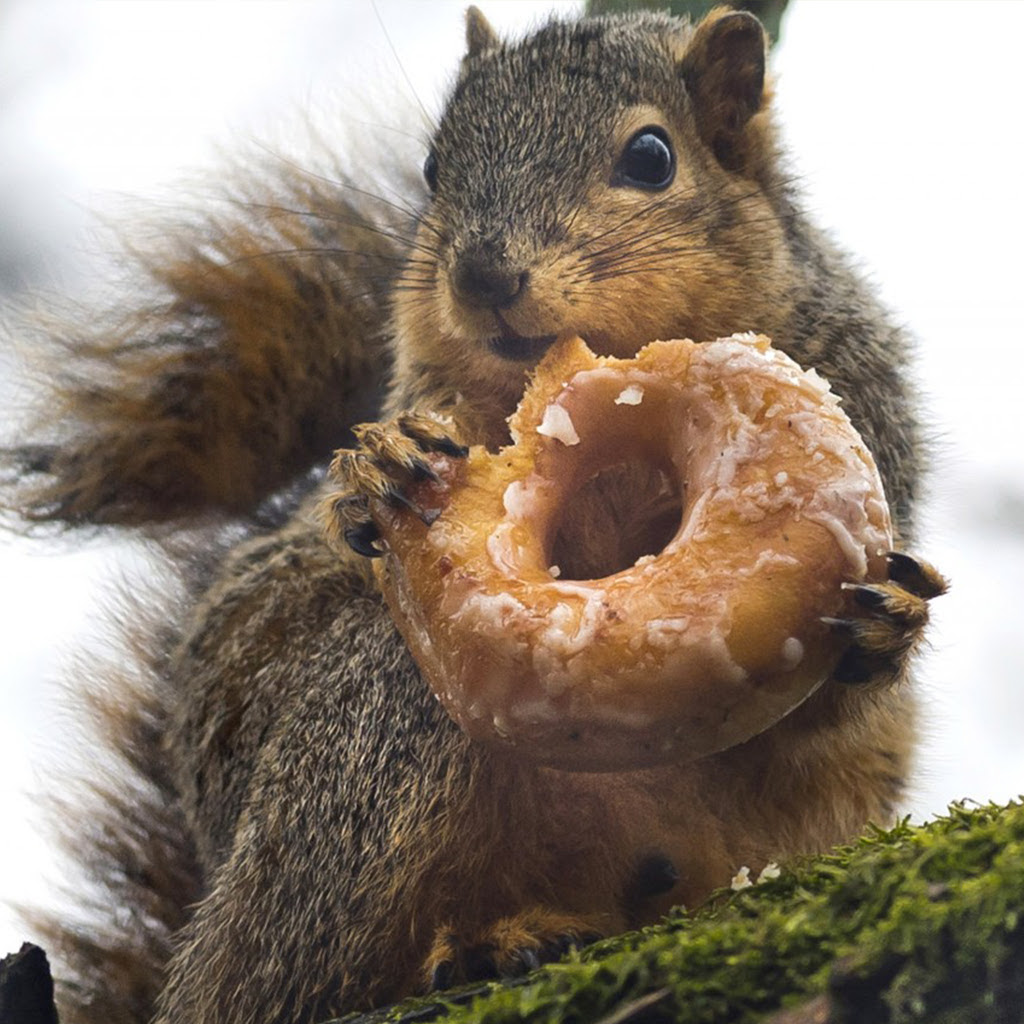
This time of the year, the squirrels get incredibly busy in my yard. They are feverishly burying nuts to prepare for the winter.  Dennis put out peanuts and we have many oak trees where I live, so acorns are plentiful.  I find these hidden squirrel goodies in our lush grass all the time.

I always wondered why they would dig some of their cache up in the fall and eat them, as well. Of course, I googled it. They eat copious amounts before winter to develop fat stores on their body to keep them warm. (Is that why I like to eat so much in the fall?) When the snow falls, the squirrels are ready. 

How are we preparing for the winter of our big opportunity?  (Wow, this guy really got an opportunity!) I know, this seems weird to be writing about big opportunities when we’re going through another COVID shutdown.  This WILL be over, and will we be among those who have made the best of this time? Or will we be among those who let this time get the best of us?

When that big goal or dream arrives, will we be ready? Maybe we want to move up in our organization, or negotiate a larger compensation for ourselves. Some people may want to launch their own business. Whatever the goal or the dream, we ought to be intentional about daily preparing for it, so when the opportunity comes, we can seize it.

If we aren’t prepared, that big chance we’ve been waiting for will probably pass us by. How can we prepare? 

1. Grow our character. Practice doing the right things even when we don’t want to.  Be authentic and honest with everyone.

2. Grow our mind.  Like a muscle in your body that grows when you weight lift, your mind grows when you feed it. Let’s nourish our minds with informational goodies that will make us reflect and grow, especially in the area of our dreams and goals.

3. Grow our relationships. John Maxwell says if we want to achieve something big, we have to link up with others. One is too small a number to achieve greatness. Develop relationships with people who add value to you. Associate with those who are where you would like to be, or who are moving in a positive direction.

4. Grow our belief in ourselves. Move outside of your comfort zone more often. Take some risks, even if they are small. Every move outside of our comfort zone enlarges us and increases our belief. 

Getting ready now will grow us into the people who attract bigger opportunities.  We don’t get what we want, we get who we are. 

Getting ready,

Jan

Jan McDonald
Maxwell Team

For a friend to subscribe, here is the link:
https://www.jan-mcdonald.com/email/

https://www.jan-mcdonald.com
https://www.linkedin.com/in/janmmcdonald/

"The future depends on what we do in the present."

--Mahatma Gandhi

I’m not sure where I’m going with this email. I’m feeling kind of numb. I want everything to be back to normal so badly. I have two friends who have lost husbands during this difficult time and one friend, Susan (not her real name,) whose 8 year old was diagnosed with Leukemia. These things are tragic enough during normal times.  It’s really hard not to wonder why such things happen to good people. 

I’m writing a workshop and one of the pieces is about having self-compassion. One of the tenants of self-compassion is that everyone suffers hardship during their lives. We fall into the trap that things are supposed to go well and that something has gone wrong when they don’t. AND Western society would rather stuff pain than admit that we are experiencing it. (You know from previous blog posts that I was so guilty of that:) Self-compassion is allowing the pain, feeling it and treating myself like my best friend would treat me. Darcy wouldn’t say, “Get over it.” or “That’s a stupid way to feel.”  She would lovingly validate my feelings and sit with me in the midst of it. She wouldn’t try and fix it–she would acknowledge that I was in a tough place. Dr. Caroline Leaf says that feeling is the beginning of healing.

I have learned a couple of  other ways to deal with suffering. I never ask the question “why?’ anymore. I haven’t ever gotten the answer I want–which is my way. I want things to turn out the way I expect and I expect life to be easy. The two questions that I have learned to ask are:

1. What does this mean?
2. And what do I do with it?

Do these questions offer the cure-all. Not really. Sometimes I don’t like the answer to “what does this mean?”  Susan immediately packed up the whole family and moved to Seattle so the family could be together as her child undergoes treatment for the next six months. I’m crying as I write this because it just feels heart wrenching to me, as does the pain of my other friends.   

Question #2 is about my response to what I am facing. I can be anxious about my inability to control the uncertainty, which leads to fear, which clouds my thinking and possibly paralyzes me from taking necessary action. I can stuff it, which is no longer an option for me. 

I’ve been choosing to acknowledge my pain and if I don’t have a skin and bones friend near, I have My Friend (God) comfort me in the midst. He knows exactly what I’m going through and how I’m feeling. This gives me hope. And this hope (the hope that God’s glory and grace will show up in in the midst of the trial) does not lead to disappointment. For we know how dearly God loves us because He has given us the Holy Spirit to fill our hearts with His love. (Romans 5:5)

Does this make everything better?  Hmmmm…sometimes. Hope allows me to look for opportunities that I wouldn’t have seen before, because of question #2. Hope allows me to live in the expectation of a better future. Hope holds self-pity at bay and reminds me that I get to choose what thoughts I dwell on. My experience has been that even if the outside circumstances aren’t changed, I am changed. My Friend helps with that. I am transformed from the inside out and the pain lessens. 

For my friends in the midst of their suffering, I can empathize with them. I certainly can’t make it better, but I can pray to My Friend Who can. 

Thank you for listening,

Jan

Jan McDonald
Maxwell Team

To subscribe to these Monday emails:
https://www.jan-mcdonald.com/email/

https://www.jan-mcdonald.com
https://www.linkedin.com/in/janmmcdonald/

"Gratitude is the healthiest of all human behaviors. The more you express gratitude for what you have, the more likely you will have even more to express gratitude for."

--Zig Ziglar

I know, this is a difficult time to be grateful…or is it just me?  Washington State has gone into another lockdown and another trip with my loved ones has been cancelled. It has been a tough couple of days for me to choose a good attitude–I’m not going to lie–let alone be grateful. This morning, I have made the choice, one more time, to lead myself well. I made a gratitude list. I’m healthy and so is my family; Jesus loves me and so does my dog; the sun is out…and the list went on. Try it…it does help and here’s why;

Inc.’s Geoffrey James wrote “If you’re not exercising this emotional muscle, you’re probably setting yourself up for failure. I’m utterly convinced that the key to lifelong success is the regular exercise of a single emotional muscle: gratitude.”

Research from the Harvard Business Review draws the same conclusions: gratitude matters.

While googling articles on gratitude, here are a few of the many benefits that I found about having an attitude of gratitude:

  • Improves physiological and emotional health
  • Opens the door to more relationships AND creates trust in relationships
  • Improves self-esteem and increases mental strength
  • Reduces pessimism and aggression
  • Gives you more to be grateful for, as Zig says above
  • Is a magnet for miracles

Try being grumpy and grateful at the same time. Personally, I have found that being grateful, even during hard times, makes those hard times “seem” easier through which to travel.

This suggestion came from an article in Forbes. “A five-minute a day gratitude journal can increase your long-term well-being by more than 10 percent. That’s the same impact as doubling your income!” WOW!

Thanksgiving is the time of year when we usually start to list things that we are grateful for…and there are many.  I’m adding to the current list that I wrote above; my friends, my business, the country that I live in, and YOU…I could go on for a long time. It’s time to create a more consistent habit of writing down those things for which I am grateful. 

Being grateful not only benefits me, but it has a positive influence on those around me. AND if a grateful heart is a magnet for miracles, I’m choosing gratefulness, because I would like to experience a couple of miracles. 

What is on your gratitude list?  I hope you take some time today to list those things that you are thankful for.

I wish you a Happy Thanksgiving!

Gratefully typed,

Jan

Jan McDonald
The John Maxwell Team

For more leadership tips, like my facebook page @janmariemcdonald

To subscribe to these Monday emails: 

www.johncmaxwellgroup.com/janmcdonald

https://www.linkedin.com/in/janmmcdonald
"Embarking on a vision without values is like driving a windy road without guard rails."

--John Maxwell

I often help companies and organizations flesh out their values because it sets standards and expectations by which employees work. When team members know specifically how they are to show up at work, this helps with engagement and productivity. 

When coaching people and chatting with individuals, I have discovered that most have not taken the time to discover their  core values.  

Values describe how we want to behave in an ongoing basis. They reflect what we want to stand for in our lives. Values provide a foundation for our relationships. They are principles or standards by which people live.  We often compare them to a compass because they give us a direction and guide our life’s journey.  They help us create the future that we want to experience. 

When the way we think, speak and behave match our values, life feels very good – we feel whole, content, in our power. Life feels full of meaning and purpose. But when these don’t align with our personal values, then things feel… wrong. Life feels uneasy. We feel out of touch, discontented, restless, unhappy.

Here’s how values work. If one of your values is honesty and you are in a relationship where that is not valued, there’s no trust in that relationship. How will you feel about that relationship?  How long will that relationship last without trust?  On the other hand, if there is honesty in that relationship, you feel good about that aspect of the relationship.
 

How can we discover our values?  Here is a way:

For one week, take a few moments each day to write down 3 things: 
•    That made you feel good
•    That made you feel bad
•    That made you feel useful
•    Others did that you admired
•    Others did that you disliked

Looking at your answers, notice the themes that come up. What do you want to do/experience more of? Less of? Upon reflection, what specific qualities, beliefs, and standards for behavior are at the root of these themes and desires?  Then write these answers down. 

I know, this takes reflection and time and if you need some help, I can be available for that.  But can you imagine how it will feel when you have definite values that define your behavior and actions. They will be your true north.  AND if you and your significant other do this together, and you have shared values, how will that make your relationship feel?  AND if you don’t have a significant other yet, the more reason to discover your values and write them down. It will give you a standard to which you can hold your incoming relationships.

Take some time and discover your values, as they are the foundation for your life purpose, and they remind you–and others–who you truly are. 

Make it a great week, 

Jan

Jan McDonald
John Maxwell Team

To subscribe to weekly motivational emails:
https://www.jan-mcdonald.com/email/

https://www.jan-mcdonald.com
https://www.linkedin.com/in/janmmcdonald/

"No matter the feelings, you can transform the energy of your emotions into your power."

--Matthew Donnelly

Last week, I wrote about  overcoming negative emotions https://jan-mcdonald-llc.mykajabi.com/blog/.  After that email went out, I realized that I forgot an important concept that goes with that. The Latin derivative for the word emotion, ‘emotere’, literally means energy in motion.  Emotions are just energy moving through the body. If you remember from last week, they are not good or bad, it’s the meaning that we attach to them. 

The First Law of Thermodynamics (Conservation) states that energy is always conserved, it cannot be created or destroyed. In essence, energy can be converted from one form into another. What happens to emotions when they are not expressed?  When anxiety, fear, resentment, sadness or any emotion that causes us to dislike ourselves and/or others are stuffed, instead of processed, they have to go somewhere.  Neuroscientists have come to the conclusion that stuffing results in a build up of energy in the body can manifest as stress. This can affect blood pressure, memory and self-esteem. Longer term, or chronic stress, can cause increased risk of diabetes, heart disease, depression, headaches, or anxiety disorders. 

AND it takes even more energy to suppress them. Think about the last time you misunderstood what someone said to you. Instead of asking for clarification (because who desires the potential conflict that could result?) you just smiled and pretended to understand. You then  went home and ran that conversation around in your head like a horse in a corral…for hours. Or is that only me that does that? 

Like we talked about last week, getting curious about the feeling, naming the feeling  can be eye-opening. The body offers very insightful, accurate, and practical guidance when we get out of the way and just listen to it, without judgement. We can listen for the message that the emotion carries for us, too.

If we are in the habit of suppressing them, learning to feel and processing them feels awkward. Yes, like doing anything new for the first time.  I had to get one of those emotion wheels which named the many emotions we could feel. Who knew there were so many? We get better as we practice “riding the emotional waves,” so to speak.

I can tell you from experience that I am happier and calmer because I’m learning this skill. I am also faster at identifying what I’m feeling. I don’t have to make up stories about the meaning behind unexpressed feelings, because I am learning the truth behind them and the REAL messages that they have for me. The more self-awareness I develop, the healthier I am, not only emotionally, but physically…and my relationships are better, too. 

You can do it, and if you need some help, I’m here for you,

Typed with feeling,

Jan

Jan McDonald
The John Maxwell Team

To get these Monday emails in your inbox, click here:

https://www.jan-mcdonald.com/email/

https://www.jan-mcdonald.com
https://www.linkedin.com/in/janmmcdonald/

"Emotions are neither good nor bad, it's our thinking that makes them so."

--My humble opinion

The second week of the quarantine was an emotional week for me. Everything angered me. To make a long story short, a conversation with my coach brought to light that I believed that feeling emotions are what weak people do. I have no idea where I got that perception—and it doesn’t really matter. That is the meaning that I attached to feeling negative emotions. When I first sobered up, all emotions were identified as anger. Because I never allowed myself to feel negative emotions, I was confused about the myriad of them and how they can be processed positively. 

Rather than cry, be sad, feel disappointment, fear for my future, rejection…I would stuff those emotions down rather than feel them. I didn’t realize just how much energy it took to squash those and move on. All of those emotions had festered and blew up during the third week of the quarantine. It was pretty ugly. This is what happens when we stuff them. Dr. Caroline Leaf says that if they don’t come out they can fester and have a profound, unfavorable impact on our health.

Here’s the truth that I came to: People who allow themselves to feel their pain are tough. Those are the strong people. That is what’s true. God gave us emotions. They have something to tell us and because I stuffed, I missed a lot of messages about life that would have helped me.  Emotions are not good or bad. It’s the meaning and the self-talk that we attach to them that make them what they are.  They help us talk about feelings more clearly, avoid or resolve conflicts better, and move past difficult feelings more easily. Knowing how to process and talk about them enhances our relationships and our lives. 

Ever the optimist, I believed that things would change for the better after the election…or I wanted to believe that. Hahahahaha. How do we defuse negative emotions?  I’m not a psychologist, and I’m not talking about the grief experienced from loss. but this is how I handle negative emotions:

1. Eat chocolate. I’m sure there’s a chemical in chocolate that makes you feel better.  Just kidding. The real #1 is to step back and identify it. Get curious. What is the emotion?  What is causing the emotion?  When I take  the time to name the emotion, it usually isn’t anger at all, but fear, rejection, disappointment, frustration, self-judgement, etc. Take the time to ask yourself enough questions to name it.  Naming it removes some of its power. 

2. Tequila shots and Moosehead beer. NOT! That’s the old me. The real second step is to FEEL the emotion. The goal is to feel it; not make it go away.  I know that sounds crazy, but  Dr. Leaf says, “Feeling is healing.”  Be your own best friend. If you were down, your best friend wouldn’t tell you to “just get over it” or “just rip the band aid off.” They would validate your feeling and empathize with you. Give yourself that same compassion for the situation you are in. (Remember, what we resists, persists and even grows.)

3. Blame someone else. That’s my fave. The real #3 is nobody or no thing makes me feel an emotion. The emotions are my own making. I even hate to write that. Think about it. My husband likes to finger tap, on the steering wheel, on the back of my chair, on the coffee table with his foot…he just taps. It is SO irritating to me. BUT, someone else might not even notice it. Flying causes extreme anxiety in many people. I don’t understand that. What drives you crazy may have zero impact on me. 

4. Deny it. Yeah, that’s like me telling you to not think about the pink elephant in the room. You’re thinking about that now, aren’t you? The real #4 is to accept it. Embrace the negative feeling and discover the message that it has for you. Ask yourself, “What does this mean?” and “What must I do with it?” Are you able to take action on whatever it is that is impacting you? I have found that most things that get under my skin are those things that I can’t control. I just have to feel the pain, and let go.  

I feel better just writing this. Especially, because much of what is bothering me today is out of my control. What I can control is my response and how I live in my own world.

Naming those pesky emotions, 

Jan

Jan McDonald
John Maxwell Team

To subscribe to these Monday emails:
https://www.jan-mcdonald.com/email/

https://www.jan-mcdonald.com
https://www.linkedin.com/in/janmmcdonald/

"Mostly, none of us have it altogether, just some of us are brave enough to keep getting back up often in-spite of being too much for some and not enough for others."

--Rene Groom

Rene Groom is my friend and she’s a fabulous writer and photographer.  I saw her post on Facebook and thought it was sooooo inspiring, I got her permission to share it with you.

“This morning as I stared at my “to-do” list. I felt restless…unable to truly focus on any one thing. So, as I often do, I grabbed my camera and headed for the truck. As I pulled into one of our local gas stations there was a young women sitting on the curb who looked like perhaps her day had started out worse than mine. As I started to get out of the truck our eyes met, briefly.

As I continued to watch her, her eyes now gazing down, I asked if she was okay.

Clearly not, she couldn’t make out the words, but shook her head as if to convince me she was. I quickly told her that I was glad, and proceeded to tell her my day started out less then stellar, as well. She half- heartily laughed. I then went on to say I was headed into the store to buy myself “a stiff one,” smiling as I explained in my world that meant a diet coke. I asked her if she’d like one too. She nodded that she would.

I made my purchases and pulled up a seat next to her on the curb, and she began to speak. While I won’t go on about the content of our conversation, I will say this…the world is full of people who are always more than happy to point out what they think they are or are not…I played her Lauren Diagle’s Song “You Say”  https://youtu.be/N8WK9HmF53w  from my phone and shared that sadly her experience isn’t unique to her. I shared that I am a writer who has severe dyslexia – and who is not immune to my critics’ voices; a  photographer who tries to compete in a competitive arena without being able to afford all the lenses and expensive cameras I might want, or feel like I need, to advance; a mom who has regrets; a wife who struggles to get it right; a daughter who…well… you know the list. I asked her if she thought she could turn off the negative noise and learn to find her tribe… to weed out those who only speak negative into her life and replace them with positive. She agreed to try. I thanked her for being there today. And told her how much the God of the Universe must love her… that HE would interrupt my “important” chore list ( we laughed) just so that I could spend time with her.  

After we said our good-byes, I drove on fighting back tears, heartbroken for a young lady that I had just met. At 57, I am getting better at turning the noise down. On my drive down by the river, I was aware that much of what I heard me tell her, was stuff my own heart also needed to hear. Mostly, none of us have it altogether, just some of us are brave enough to keep getting back up often in-spite of being too much for some and not enough for others.” 


WOW! Just wow! I don’t know who else needed to hear that…besides me.  Find your tribe, those who speak life and greatness into you. You deserve it. We deserve it. 

Turning down the noise, 

Jan

Jan McDonald
John Maxwell Team

To subscribe:
https://www.jan-mcdonald.com/email/

https://www.jan-mcdonald.com
https://www.linkedin.com/in/janmmcdonald/

"The art and science of asking questions is the source of all knowledge."

--Thomas Berger

Leadership is about influence and relationships.  When the leadership level is high, the leader is able to cast the vision, set the strategy and because of the leader’s influence, the followers follow. If the leadership ability is low, the followers look to the leader for answers to questions before proceeding.

Management is different. It is about making the leader’s vision happen.  Managers influence people to accomplish the vision of the leader.  Managers work hard to get others to do things. 
 
As former CEO of Life Options, when the staff would ask questions, I would give them the answer and go on my merry way.  This was much easier than taking the time out of my crazy schedule to explain the answer. This worked well when there were only two staff and one building.
 
The more the organization grew, the more questions I answered. I really noticed this question answering challenge when we opened our second center in another town in 2009.
 
When I began applying leadership principles, things really changed. When my staff would ask a question, instead of the easy way of telling them the answer, I would ask them a question back:
 
“What do you think we could do?”
“What do you think a good solution would be?”
“How do you think we should handle that?”
 
If it was a legal or medical question to which I didn’t know the answer, I would ask them if they knew who to call or email to get the right answer.  If they didn’t know who to call or email–I would give them that information.  At first, I suffered control freak withdrawals and my staff wondered where their old boss went.
 
I had set a standard for excellence and they knew what was expected, but because I had always given them the answer, they didn’t really trust themselves. As we continued with this new way of problem solving, they began to realize that I was going to answer their question with a question.  They thought of the solution before they came to talk to me. The conversations were more like this;
 
“Hey, I have this challenge and this is what I thought would be a good solution.” More often than not, my staff began to come up with the best answer. They began to take on more responsibility and became more efficient at their jobs.  The bonus? Sometimes, they had better ideas than I would have ever thought of!!! AND I got my life back.

Developing and modeling leadership skills is contagious.  Those you lead will watch you grow and believe that they can do that also. As they grow and become leaders themselves, occupational burnout can become a symptom of the past.

Ask away!

Jan

Jan McDonald
John Maxwell Team

To subscribe to these motivational weekly emails, click here:
https://www.jan-mcdonald.com/email/

https://www.jan-mcdonald.com
https://www.linkedin.com/in/janmmcdonald/

"You've got to make your own kind of music, sing your own special song, make your own kind of music, even if nobody else sings along."

--Cass Elliot

Niccolò Paganini was an Italian violinist, violist, guitarist, and composer. He was the most celebrated violin virtuoso of his time, and left his mark as one of the pillars of modern violin technique.  He came out onto the stage one night for a concert hearing a huge round of applause.  He noticed that the violin in his hand was not his one-of-a-kind instrument, uniquely fashioned for him.  Embarrassed, he told the crowd that there had been some mistake and he didn’t have his own violin. 

 He excused himself and hurried behind the curtain to grab that special violin. It was gone!  Someone had stolen his precious violin and left the second-hand one that he was holding in his hand.

He remained back of the curtain a moment, then came out before his audience and explained his predicament. Then he said, “Ladies and Gentlemen: I will show you that the music is not in the instrument, but in the soul.” And he played as he had never played before and the music that poured forth from that old violin enraptured the audience! When he was finished, the thrilled audience gave him a standing ovation.  

It is your mission, a tested and tried one, to walk out on the stage of this world and reveal to all earth and Heaven that the music is not in conditions, not in the things, not in externals, but the music of life is in your own soul.                                                                    —Charles Richardson
 
Outside circumstances and conditions can have tremendous influence on our behavior and our results. When we empower those outside uncontrollable events to impact us negatively, we give away our own personal power.  How do we take back that power?  We take back that power by changing our thinking. We stop trying to manipulate and control those things/people that we can’t, and take responsibility for those things that we can. Whatever we think about grows…or my favorite axiom, “What we resist, persists.”  

We let go and tune in on the good. We sing our own song without comparing our melody to others.  We get grateful about our blessings and we do the best we can. We believe for the best. We imagine fabulous outcomes.  We look for the exceptional in everything and everybody.  We know how to do this…we do the opposite all the time when we worry. The choice is ours, 

Singing my own song, 

Jan

Jan McDonald
John Maxwell Team

To subscribe, click here:
https://www.jan-mcdonald.com/email/

https://www.jan-mcdonald.com
https://www.linkedin.com/in/janmmcdonald/

"Teachers change the world, one child at a time."

--I don't know who said this, but it's true

This is a crazy year for teachers. I know this first hand from one of my teacher, coaching clients. They have to learn new technology, new student engagement strategies and new ways of instructing. While the teachers are learning, at the same time their students need to learn new concepts in new ways with new technology, too. This is daunting for me to think about, let alone be the teacher that desires to make a positive impact on their students.  Yes, the influence of a good teacher can never be erased. 

Let me share one of my favorite stories with you:

As she stood in front of her 5th grade class on the very first day of school, she told the children an untruth. Like most teachers, she looked at her students and said that she loved them all the same. However, that was impossible, because there in the front row, slumped in his seat, was a little boy named Teddy Stoddard.

Mrs. Thompson had watched Teddy the year before and noticed that he did not play well with the other children, that his clothes were messy and that he constantly needed a bath. In addition, Teddy could be unpleasant. It got to the point where Mrs. Thompson would actually take delight in marking his papers with a broad red pen, making bold X’s and then putting a big “F” at the top of his papers.

At the school where Mrs. Thompson taught, she was required to review each child’s past records and she put Teddy’s off until last. However, when she reviewed his file, she was in for a surprise. Teddy’s first grade teacher wrote, “Teddy is a bright child with a ready laugh. He does his work neatly and has good manners… he is a joy to be around..”

His second grade teacher wrote, “Teddy is an excellent student, well liked by his classmates, but he is troubled because his mother has a terminal illness and life at home must be a struggle.”

His third grade teacher wrote, “His mother’s death has been hard on him. He tries to do his best, but his father doesn’t show much interest and his home life will soon affect him if some steps aren’t taken.”

Teddy’s fourth grade teacher wrote, “Teddy is withdrawn and doesn’t show much interest in school. He doesn’t have many friends and he sometimes sleeps in class.”

By now, Mrs. Thompson realized the problem and she was ashamed of herself. She felt even worse when her students brought her Christmas presents, wrapped in beautiful ribbons and bright paper, except for Teddy’s. His present was clumsily wrapped in the heavy, brown paper that he got from a grocery bag. Mrs. Thompson took pains to open it in the middle of the other presents. Some of the children started to laugh when she found a rhinestone bracelet with some of the stones missing, and a bottle that was one-quarter full of perfume.. But she stifled the children’s laughter when she exclaimed how pretty the bracelet was, putting it on, and dabbing some of the perfume on her wrist.

 
Teddy Stoddard stayed after school that day just long enough to say, “Mrs. Thompson, today you smelled just like my Mom used to.”

After the children left, she cried for at least an hour. On that very day, she quit teaching reading, writing and arithmetic. Instead, she began to teach children. Mrs. Thompson paid particular attention to Teddy. As she worked with him, his mind seemed to come alive. The more she encouraged him, the faster he responded. By the end of the year, Teddy had become one of the smartest children in the class and, despite her lie that she would love all the children the same, Teddy became one of her “teacher’s pets.”

A year later, she found a note under her door, from Teddy, telling her that she was still the best teacher he ever had in his whole life.

Six years went by before she got another note from Teddy. He then wrote that he had finished high school, third in his class, and she was still the best teacher he ever had in life.

Four years after that, she got another letter, saying that while things had been tough at times, he’d stayed in school, had stuck with it, and would soon graduate from college with the highest of honors. He assured Mrs. Thompson that she was still the best and favorite teacher he had ever had in his whole life.

Then four more years passed and yet another letter came. This time he explained that after he got his bachelor’s degree, he decided to go a little further. The letter explained that she was still the best and favorite teacher he ever had. But now his name was a little longer…. The letter was signed, Theodore F. Stoddard, MD.

The story does not end there. You see, there was yet another letter that spring. Teddy said he had met this girl and was going to be married. He explained that his father had died a couple of years ago and he was wondering if Mrs. Thompson might agree to sit at the wedding in the place that was usually reserved for the mother of the groom.

Of course, Mrs. Thompson did. And guess what? She wore that bracelet, the one with several rhinestones missing. Moreover, she made sure she was wearing the perfume that Teddy remembered his mother wearing on their last Christmas together. They hugged each other, and Dr. Stoddard whispered in Mrs. Thompson’s ear, “Thank you Mrs. Thompson for believing in me. Thank you so much for making me feel important and showing me that I could make a difference.”

Mrs. Thompson, with tears in her eyes, whispered back. She said, “Teddy, you have it all wrong. You were the one who taught me that I could make a difference. I didn’t know how to teach until I met you.” 


In spite of the massive changes you have had to make, I know  there will be many lives that will be positively impacted because of you…because your students ARE important to you. You believe in them. Thank you, teachers, for doing what it takes to make a difference in the lives of those you influence. 

Gratefully typed, 

Jan 

Jan McDonald
The John Maxwell Team

For a friend to subscribe, here is the link:
https://www.jan-mcdonald.com/email/

https://www.jan-mcdonald.com
https://www.linkedin.com/in/janmmcdonald/

"Goals. There's no telling what you can do when you get inspired by them. There's no telling what you can do when you believe in them. There's no telling what will happen when you act upon them.

--Jim Rohn

I know, I feel the same way, too. 2020 can’t be over fast enough. BUT…do we just want to survive it, or do we want to position ourselves for a stellar 2021. We don’t know yet what next year is going to look like. We can wait to find out, or we can do what we can do to catapult ourselves into 2021.  Maybe we could set some goals. 

Many people don’t even like to hear about goal setting. They have not reached their goals in the past and have come to believe, “what’s the use, I tried so many times.”  This “failure” becomes their identity. They keep living day in and day out the same life, thinking that they are unable to change. NOT.
 
I believe most, if not all of us, have a longing to be more, do more and have more.  Or maybe this longing manifests itself in a very subtle discontent. This dissatisfaction can urge us identify our vision…what we want for our life…that’s where the goal setting becomes so important.
 
The most successful people on this planet didn’t wake up one day with an idea and a few minutes later after they got dressed became successful…No way. They had an idea and they developed a plan.  Within that plan there were goals – some big, some little – some attainable, some way out there. 


And each day, they worked at it – chipping away, having triumphs and failures along the way but tweaking and re-evaluating and working toward their desired life. 


Have you ever thought about it this way?  We have had goals from the day we were born.  Sit up. Crawl. Walk. Talk. Feed ourselves. Dress ourselves. Express ourselves. Make friends. Learn. Communicate. Develop relationships. Learn a skill.  When you think about it, it’s true, we’ve been setting goals since we were babies. And look, we have achieved these.  We didn’t care how many times we fell on our butts (failed) when we wanted to walk. We just kept doing it until we got it right.

Going through life without goals is like getting in our car and driving aimlessly expecting to arrive at our destination without a clue how to get there.  If we had a road map or a GPS, we could have gotten there in a reasonable amount of time but because we just drove and drove – maybe we will eventually get there but at what cost?  How much time and energy did we waste because we didn’t take a couple minutes to punch in the destination in our GPS? AND did our destination give us joy? Were we excited to get there?

We have 87 days left to plan for 2021. Here are some ideas:

1. What does your desired life look like? Spend a couple of hours really thinking about what you want. Then write it down. 

2. Who do you need to become to get what you want? What characteristics do you need to develop?

3. List the thing or things that you perceive are preventing you from getting there. 

4. What are 5 things you can do NOW to overcome the things listed in step 3 so you can move forward to the destination of your desire? 

5. What is ONE big thing that you’ve been putting off?  Do it now.  

There. That wasn’t so hard, was it? The benefit of starting now, is that you can get your destination locked in your mind’s eye. Then you develop a plan and create habits that will get you there. Baby steps now (we still have 87 days) will help you finish this year strong and launch into 2021 prepared for your best year yet.  

If you need help with this, I’m just an email away!

Excitedly typed,

Jan

Jan McDonald
John Maxwell Team

For a friend to subscribe, here is the link:
https://www.jan-mcdonald.com/email/

https://www.jan-mcdonald.com
https://www.linkedin.com/in/janmmcdonald/

"Discouragement is not from God ."

--Ignatius of Loyola

One day, the Devil laid out his gleaming, razor-edged tools upon a worn and ancient wooden table. He announced a “fire” sale and carefully marked the price upon each tool: ANGER: $100, RESENTMENT: $400, HATRED: $600, etc.

Each tool sold almost as quickly as it was placed upon the table. Toward the end of the day, a crooked old man in tattered rags approached. The man eyed the tools that remained, but was taken by a certain tool at the end of the table. The tool resembled the two long and bowed fangs of a viper. Its chrome-like pointy tusks caught the sun and sent flashes of blinding light everywhere. With one hand, the old man blocked his eyes from the glare and with the other, he reached for the tool. As he grabbed hold, the tool’s steely, needle tips nearly pierced his hand. This seemed to please the old man. He snatched up the tool and held it to his chest. With a glint in his eye, the man asked the Devil, “How much for this one?”

“I’m sorry, that tool isn’t for sale,” the Devil replied.

Without hesitation, the man said, “But I’ll pay double.”

The Devil narrowed his eyes and hissed, “Sir, I’ve told you, that tool is not for sale, nor will I ever sell it. It is the most useful tool I own and without it, I wouldn’t be half as effective in my work. With that tool alone, I can accomplish my every task. Now good day, sir.”

Dejected, the man looked once more at the shiny tool, then slowly placed it on the table. With almost a whisper, he said to the Devil, “If I can’t buy it, would you, at least tell me its name?”

A slow and wicked grin grew across the Devil’s face. “Of course, old man, its name is… Discouragement.”

Perplexed, the old man wondered out loud, “Why is this tool so important to you?”

The devil responded, “It’s more useful to me than any of the others. When I can’t bring down my victims with the rest of my tools, I use discouragement, because so few people realize it belongs to me. Nothing paralyzes a person, nothing stops someone in their tracks like discouragement and hopelessness. Discouragement and hopelessness are no respecters of persons. They keep the unemployed unemployed. The homeless homeless. The sick sick. They can even draw the most powerful ministry to its knees. When overcome with discouragement and hopelessness, the person can’t pray, they can’t worship and they become a victim of their environment. Discouragement and hopelessness drains their victims of courage, vision, faith, expectation and the will to make a difference in the world. If I can get you discouraged and hopeless, then I have successfully neutralized you. You are left with only enough energy to feel sorry for yourself.”  

Yes, discouragement is real, especially today.  Let me give you some hope this morning. Consider the Law of Polarity. Simply put, for every action there is an equal and opposite reaction. There’s hot and cold, positive and negative, destruction and creation, good and evil.  Napoleon Hill puts it this way, “Every adversity, every failure and every heartache carries with it the seed of an equivalent or a greater benefit.” If your life is bad now, this universal Law of Polarity tells us that good is coming.  Look back on your own life…hasn’t that happened to you before?

As a person of faith, I can rest in the promise that God is good and good will come out of the bad times. Yes, this has been proven in my life time after time. Dennis and I viewed his cancer in 1995 as tragic and it turned out to be one of our greatest blessings! Although, during that time we certainly couldn’t see much good.  Maybe I’ll share that story another time. God was working in the background during that setback, and God doesn’t change. He’s always conspiring for our good. 

I don’t know what you are going through at this time. If it’s a hard season for you, I am not making light of your adversity at all. In fact, I would be happy to walk with you or pray for you during this time–just reach out to me. Be encouraged, because in the words of Abe Lincoln, “this too shall pass.”  And like Dennis and I with his cancer, you will be stronger for it. 

Hopefully typed,

Jan

Jan McDonald
John Maxwell Team

For a friend to subscribe, here is the link:
https://www.jan-mcdonald.com/email/

https://www.jan-mcdonald.com
https://www.linkedin.com/in/janmmcdonald/

"Success is not final, failure is not fatal: it is the courage to continue that counts."

--Winston Churchill

My friend Les Brown says “Too many of us are not living our dreams because we are living our fears.” We may be worried about what other people will say. And it’s true, we may well be laughed at or criticized by those who  lack our courage. But those who never made a mistake or never failed never tried anything new. And there is only one way to avoid criticism: do nothing, say nothing, and be nothing. And it’s obvious where that will lead. 

It doesn’t matter how long it takes us or how slowly we go,
as long as we don’t give up. As long as we don’t stop.


I came across something called Rules for Being Human that apply to all of us at one time or another:

Rule #1: You will learn lessons.
Rule #2: There are no mistakes–only lessons.
Rule #3: A lesson is repeated until it is learned.
Rule #4: If you don’t learn the easy lessons, they get harder.
Rule #5: You’ll know you’ve learned a lesson when your actions change. 

Everyone fails at some time or something. The question is not will we fail or make mistakes, the question is how will we respond to them. The big plus of failure is that every time you fail and learn from it—it grows you up. It makes you better. You grow mentally. You get smarter. You feel better about yourself every time. Failing and making mistakes are not such a big deal. You try bigger things. It turns into an amazing transformative cycle where you begin to believe big about yourself. 

John Maxwell says “If we learn to embrace a new definition of failure, then we are free to start moving ahead–and failing forward.”  That is, if we never give up!

Failing forward, 

Jan McDonald
John Maxwell Team

To subscribe, click here:
https://www.jan-mcdonald.com/email/

https://www.jan-mcdonald.com
https://www.linkedin.com/in/janmmcdonald/

Where Should We Send The 5 Simple Steps to Maximize Your Effectiveness Guide?